

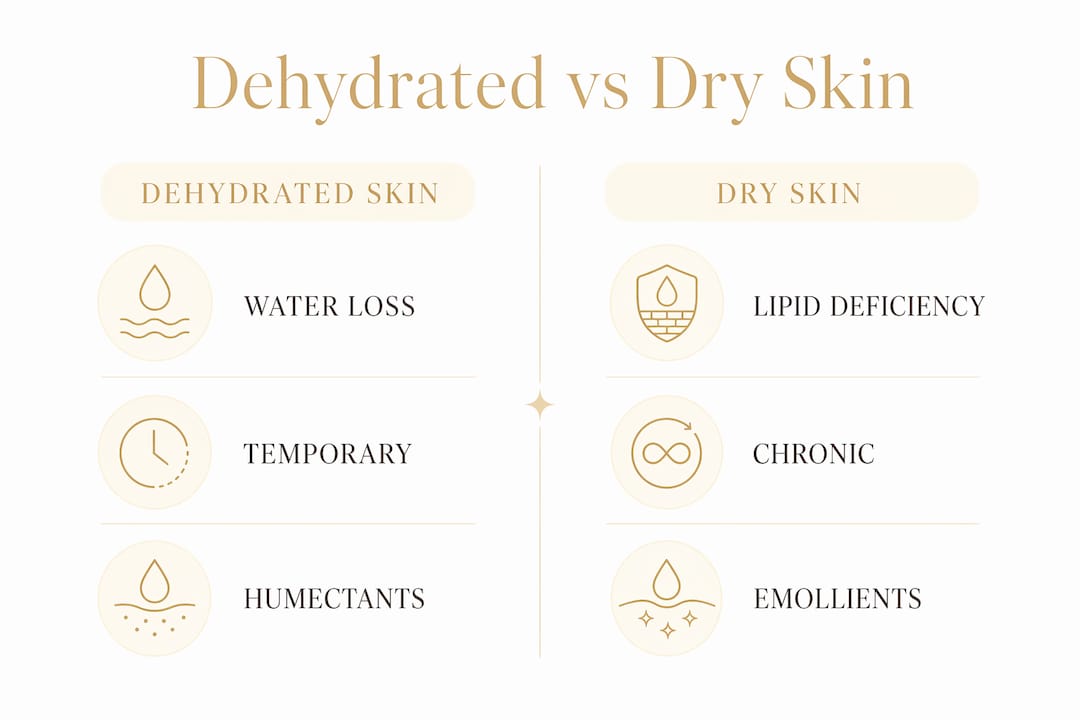
Dehydrated skin lacks water; dry skin lacks oil. That single distinction, framed by Dr. Alina Bridges at Northwell, determines everything about which treatment will actually help you. Getting it wrong, applying heavy oils to dehydrated skin or humectants alone to a lipid-depleted barrier, can stall your results and leave your skin feeling worse.
Here's how to screen yourself before your next appointment:
- Dehydrated skin feels tight, looks dull, and shows fine surface lines that appear suddenly after a flight, a day in Singapore's air-conditioned offices, or a bout of over-cleansing. It can affect oily and combination skin equally.
- Dry skin flakes, feels rough, and follows a chronic, consistent pattern year-round, regardless of season or travel.
- The pinch test: gently pinch the skin on your cheek. Poor elasticity or slow return suggests dehydration, though it's a directional screen only, not a diagnosis. Textured skin, inflammation, or age-related changes can affect the result.
- Oily but tight? That combination almost always signals dehydration. Your skin overproduces oil to compensate for lost water, so adding more oil alone won't fix it.
Your immediate action: for dehydration, layer a humectant serum (hyaluronic acid or glycerin) onto damp skin, then seal with a moisturizer. For dry skin, reach for an emollient or occlusive-rich cream that replenishes lipids and rebuilds your barrier. When both conditions overlap, hydrate first, then seal with a lipid-rich layer.
Pro Tip: Clinical research on xerosis cutis shows measurable barrier improvements typically require consistent care over several weeks. Set realistic expectations: you're nourishing a system, not fixing a surface.

Common environmental triggers in Singapore worth noting before your visit: prolonged AC exposure, air travel, hot showers, and harsh cleansers. Mention these to your therapist so your session can be calibrated from the first minute.
Table of Contents
Houseofwellnesssg Treats Both, and Knows the Difference
Knowing whether your skin needs water or lipids is exactly where a skilled therapist earns their place. At Houseofwellnesssg in Tanjong Pagar, every session begins with a skin assessment that reads timing, symptom patterns, and your current routine before a single product touches your face.

For dehydrated skin, the Hydrodiamond treatment combines gentle exfoliation with deep infusion of hydrating actives, delivering humectants where they're needed most. The Oxyjet therapy follows a similar logic, using pressurized infusion to push serums into the skin's surface layers. Both use Dermalogica and Sothys formulations, chosen specifically for their water-binding and barrier-supporting properties.
For dry, lipid-depleted skin, the ProRestore facial focuses on barrier repair with nourishing masks and emollient-rich protocols that work with your skin's natural structure rather than stripping it further. Gentle dermaplaning, when appropriate, can be paired with lipid replenishment to allow deeper product absorption without compromising a fragile barrier.
Realistic timeline: consistent in-clinic care combined with the right at-home routine typically produces visible improvement over several weeks, which aligns with what barrier repair research shows for stratum corneum recovery. Your therapist will also recommend a supporting homecare routine using Sothys or Dermalogica products, so results carry forward between sessions. Browse the full range of skin treatments or book your first session at Houseofwellnesssg today.
Key Takeaways
Dehydrated skin needs water-binding humectants first; dry skin needs lipid and barrier replenishment, and treating one condition like the other delays recovery.
| Point | Details |
|---|---|
| Core distinction | Dehydrated skin lacks water; dry skin lacks oil or lipids. |
| Fastest self-screen | Use the pinch test and note whether symptoms appeared suddenly or have been chronic. |
| At-home fix direction | Humectants (hyaluronic acid, glycerin) for dehydration; emollients and occlusives for dry skin. |
| Timeline for results | Consistent care over several weeks is needed for measurable barrier improvement. |
| Houseofwellnesssg | Offers Hydrodiamond and Oxyjet for dehydration, ProRestore for barrier repair, using Sothys and Dermalogica. |