
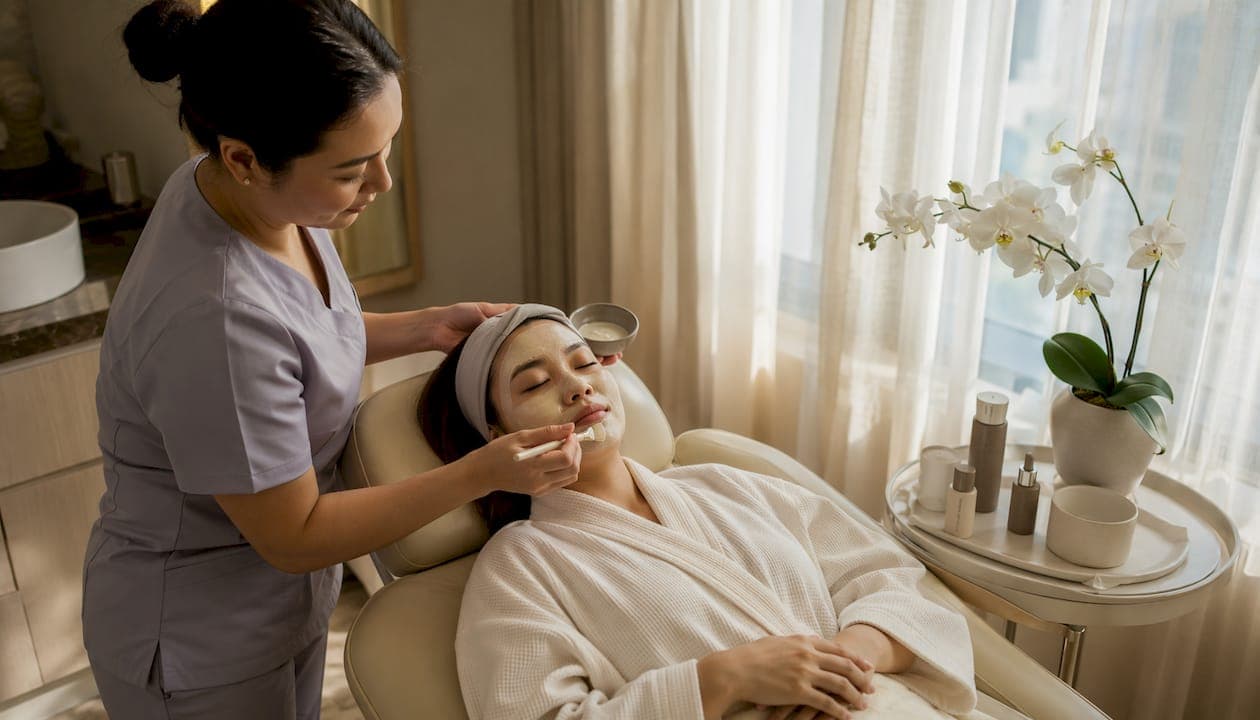
Barrier-repair facials, hydrating infusion treatments, gentle enzyme exfoliation, and red LED therapy are the safest starting points for sensitive skin in Singapore. The single most important next step is booking a consultation with a therapist who offers a documented patch test and a tailored protocol before any treatment begins. Walk-in services that use high heat, aggressive extractions, or strong acid blends are best avoided entirely.
What to expect at a glance:
- Session length: Usually a moderate duration for hydrating or calming facials; LED add-ons are relatively short
- Downtime: Minimal to none for barrier-repair and hydration facials; mild short-lived redness is possible
- First step: Request a patch test at least 24–48 hours before your first full session
- Booking tip: Ask specifically about the therapist's experience with sensitive or reactive skin before confirming
Table of Contents
- What does "sensitive skin" actually mean?
- How Singapore's climate affects your sensitive skin
- What should you look for in a facial for sensitive skin?
- What ingredients and procedures should you avoid?
- Which treatments are actually safe for sensitive skin?
- Is now the right time to book a facial?
- How Houseofwellnesssg approaches facials for sensitive skin
- Key Takeaways
- What a therapist actually looks for when treating sensitive skin
- Ready to give your sensitive skin the care it deserves?
- Useful sources and further reading
What does "sensitive skin" actually mean?
Sensitive skin sits on a spectrum, and knowing where you fall shapes every treatment decision you make. At one end is transient reactivity — skin that flushes briefly after a hot shower or stings when you try a new product, then settles within an hour. At the other end is chronic barrier dysfunction, where the outermost layer of skin consistently fails to retain moisture or block environmental irritants, leading to persistent redness, stinging, and frequent flare episodes.
Estheticians note that sensitive skin often signals a weakened skin barrier, and the goal of any facial should be to soothe and support that barrier rather than push or challenge it.
Common symptoms to watch for:
- Redness, flushing, or visible capillaries after mild stimulation
- Stinging, tingling, or burning when applying products
- Tightness that persists well after cleansing
- Post-treatment hyperreactivity (skin that reacts more, not less, after a facial)
- Frequent dryness patches even in humid conditions
Triggers that commonly set sensitive skin off:
- Fragrance and alcohol in skincare products
- Harsh acids (high-strength AHAs and BHAs)
- Prolonged steam or heat exposure
- Over-exfoliation, whether physical or chemical
- Certain botanicals (eucalyptus, peppermint, citrus extracts)
- Environmental stressors: pollution, UV, and sudden temperature changes
Pro Tip: One non-obvious sign of a compromised barrier — rather than simply reactive skin — is persistent tightness that appears even in humid environments. Truly reactive skin tends to calm between triggers; a compromised barrier feels tight and uncomfortable almost constantly, regardless of the weather outside.
Use this as a quick self-check: if your skin reacts to two or more of the triggers above and takes longer than a few hours to settle, you likely fall in the moderate-to-flare-prone range and need a therapist who specializes in barrier repair, not just "gentle" facials.
How Singapore's climate affects your sensitive skin
Singapore's combination of intense equatorial sun, high ambient humidity, and heavily air-conditioned interiors creates a uniquely challenging environment for reactive skin. The constant shift between outdoor heat and cold indoor air strips moisture from the skin's surface repeatedly throughout the day, weakening the barrier even when the overall humidity is high. Heat also triggers flushing and capillary dilation in sensitive skin, which can make post-facial redness linger far longer than it would in a cooler climate.
Sun exposure compounds this. UV radiation increases inflammation in already-reactive skin, and Singapore's year-round UV index means that going outdoors without adequate protection right after a facial can undo the calming work done in the treatment room. Pollution particles from traffic and urban density add another layer of oxidative stress that antioxidant-rich, barrier-supporting products help neutralize.
For facials specifically, this means: skip prolonged steam, favor cooling masks and mist-based hydration, and always apply a broad-spectrum SPF before leaving the clinic. Lightweight barrier emollients — think ceramide-based moisturizers rather than heavy occlusives — work better in Singapore's humidity than thick creams that can trap heat.
Pro Tip: Schedule your patch test and your first sensitive-skin facial during a cooler part of the day, ideally in the morning. After the session, plan to stay indoors or in air-conditioned spaces for at least a few hours. Avoid direct sun and heavy exercise for 24–48 hours, which is especially practical to plan around if you book mid-week rather than before a weekend of outdoor activities.
What should you look for in a facial for sensitive skin?
A well-designed sensitive-skin facial always starts before you lie down on the treatment bed. The consultation and patch test are not optional extras — they are the foundation of a safe outcome. A formal consultation, documented patch test policy, and a therapist with clear experience treating reactive skin are the three non-negotiables.

Ingredients that calm and repair
| Ingredient | Function | When to be cautious |
|---|---|---|
| Hyaluronic acid | Deep hydration, plumps the barrier | Generally well tolerated at all concentrations |
| Ceramides | Barrier repair, locks in moisture | Rarely irritating; avoid if combined with heavy fragrances |
| Niacinamide (low %) | Reduces redness, strengthens barrier | Use at 2–5%; high concentrations (10%+) can cause flushing |
| Aloe vera | Cooling, anti-inflammatory | Avoid if you have a latex allergy |
| Oat extract (colloidal oat) | Soothes itch and irritation | Very well tolerated; one of the gentlest options available |
| Chamomile (bisabolol) | Calms redness and inflammation | Generally safe; avoid if you have a ragweed allergy |
| Glycerin | Humectant, draws moisture to skin | Well tolerated; avoid formulas that pair it with alcohol |
| Fragrance / essential oils | None — purely aesthetic | Always avoid on sensitive skin |
Techniques to prefer
- Short, low-heat steam (under 5 minutes) or no steam at all
- Gentle enzyme exfoliation rather than high-strength acid peels
- Cautious or no manual extractions; if needed, minimal mechanical force only
- Red or near-infrared LED as a calming add-on
- Cooling masks applied after active treatment steps
Questions to ask before booking
- "Do you offer a patch test, and how far in advance should I schedule it?"
- "Can I see the ingredient list for the products you'll use on my skin?"
- "What is your extraction policy for sensitive or reactive skin?"
- "What downtime should I expect, and what aftercare do you recommend?"
- "Who will perform the treatment, and what is their experience with sensitive skin?"
A therapist who answers these questions clearly and without hesitation is a strong signal that you are in the right hands.
What ingredients and procedures should you avoid?
Wrong treatment choices can worsen sensitivity significantly, sometimes triggering flares that take weeks to resolve. Knowing the red flags before you book protects you from that outcome.
Chemical red flags:
- High-strength AHAs (glycolic acid above 10%, lactic acid above 15%)
- BHAs at concentrations designed for active acne treatment on already-inflamed skin
- Strong retinoids applied during a facial without prior tolerance testing
- Concentrated vitamin C serums (L-ascorbic acid above 15%)
- Alcohol-based toners or astringents
- Any product listing "fragrance," "parfum," or essential oils in the first half of the ingredient list
Procedural red flags:
- Aggressive microdermabrasion (crystal or diamond tip at high intensity)
- Deep chemical peels without a prior tolerance assessment
- Prolonged steam (more than 5–10 minutes), especially at high heat
- Forceful manual extractions on inflamed or flushed skin
- High-intensity laser treatments without a dermatologist's clearance
How to spot hidden irritants in treatment descriptions:
Watch for phrases like "deep resurfacing," "intense peel," "strong acid blend," "brightening peel," or "exfoliating treatment" without further qualification. These are often shorthand for high-strength acids or abrasive techniques. If a menu description does not specify the acid concentration or the exfoliation method, ask before booking.
Quick red-flag checklist before you confirm:
- Does the treatment include steam for more than 10 minutes? Skip it.
- Are extractions listed as a standard step, not an optional one? Confirm they can be omitted.
- Does the product list include fragrance or alcohol? Request alternatives.
- Is the therapist asking about your skin history, or skipping straight to booking? A skip is a warning sign.
Which treatments are actually safe for sensitive skin?
The good news: there are several genuinely effective options that calm, hydrate, and gradually strengthen reactive skin without the risk of a flare. The key is matching the treatment to your current skin state and your goals.

Hydrating and barrier-repair facials are the most universally appropriate starting point. These use hyaluronic acid, ceramide serums, and calming masks to replenish moisture and reinforce the skin's protective layer. Sessions typically run 45–75 minutes, downtime is minimal, and the immediate effect is softer, less reactive skin. Confirm pricing directly at booking, as costs vary by clinic and protocol length.
Red LED and near-infrared light therapy is one of the most skin-friendly adjuncts available. Red light calms inflammation, reduces redness, and supports the skin's natural healing process without any heat or mechanical contact. Sessions as an add-on typically run 15–30 minutes. There is no downtime, and it pairs well with hydrating facials for a combined calming and repair effect.
Gentle enzyme exfoliation uses fruit-derived enzymes (papain from papaya, bromelain from pineapple) to dissolve dead skin cells without the inflammation risk of high-strength acids. Enzyme exfoliation improves texture and radiance gradually, making it a practical option for clients who need resurfacing but cannot tolerate chemical peels. Avoid it during an active flare.
Oxygen and infusion therapies deliver hydrating serums into the skin using pressurized oxygen or gentle infusion technology rather than abrasion. These are well tolerated by most sensitive skin types, produce an immediate plumping and brightening effect, and carry no downtime. The Hydrodiamond infusion treatment at Houseofwellnesssg is one example of this approach applied in a sensitive-skin-friendly format.
Cautious clarifying facials for acne-prone sensitive skin are possible, but therapist skill matters enormously here. Minimal mechanical force, anti-inflammatory serums, and blue LED (for bacteria) rather than aggressive extractions keep the risk of post-treatment flaring low. Always confirm the extraction policy before booking if your skin is both acne-prone and reactive.
Downtime guide: none for LED and infusion therapies; minimal (possible mild short-lived redness) for enzyme exfoliation and hydrating facials; mild to moderate for any extraction-inclusive session.
Is now the right time to book a facial?
Before you schedule, a quick self-assessment saves you from booking at the wrong moment. Work through this checklist:
- Check your current flare status. If your skin is actively red, inflamed, or stinging right now, wait until it settles before booking. A facial during an active flare almost always makes things worse.
- Note any recent product changes. Introducing a new serum or moisturizer in the past two weeks means your skin's baseline is still adjusting. Give it time before adding a professional treatment.
- Consider recent procedures. Microneedling, laser, or strong chemical peels within the past four weeks are a reason to delay. Confirm clearance with your dermatologist if you are unsure.
- Clarify your goal: maintenance or correction? Maintenance facials for stable sensitive skin typically work well every 2–4 weeks. Corrective courses for barrier repair or persistent redness may follow a closer schedule initially, then space out.
- Schedule your patch test first. Book it 24–48 hours before your planned facial. Use that window to stay out of direct sun and avoid new products on the tested area.
- Know when to seek medical input instead. Active, severe eczema or rosacea flares, uncontrolled perioral dermatitis, or a new skin condition you have not had assessed by a dermatologist are all reasons to get a medical opinion before a spa facial.
After your session, expect the treated area to feel calm and slightly flushed for a few hours. Redness that persists beyond 24 hours, new breakouts, or increased stinging are signals to contact your therapist and, if needed, a dermatologist.
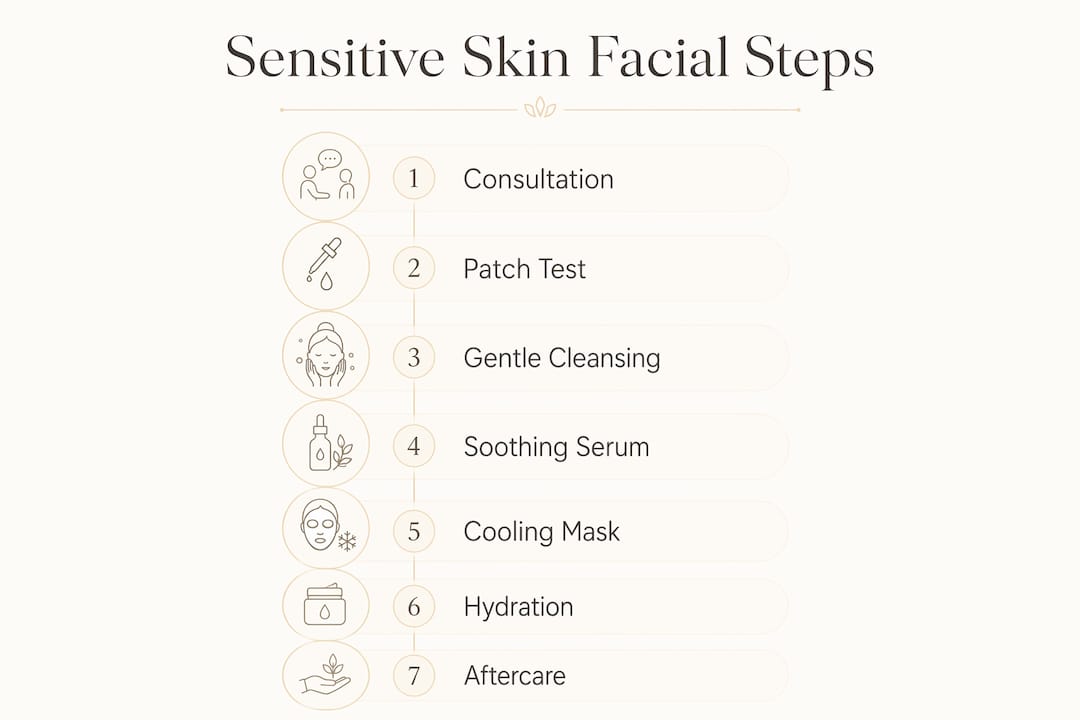
A professional sensitive-skin facial includes a personalized assessment, gentle cleansing, soothing serums and masks, and follow-up guidance — and the follow-up cadence matters as much as the treatment itself.
How Houseofwellnesssg approaches facials for sensitive skin
Houseofwellnesssg, located in Tanjong Pagar, Singapore, is built around the idea that your skin and your overall wellbeing are inseparable. Every session begins with a consultation, not a product pitch. For sensitive skin specifically, that means assessing your current barrier health, identifying triggers, and designing a protocol that supports rather than challenges your skin.
The clinic's customizable facial protocols integrate professional-grade products from Sothys and Dermalogica, both of which offer fragrance-free, hypoallergenic formulations suited to reactive skin. Treatment plans are adapted session by session based on how your skin responds, with no pressure to commit to a fixed package before you know what works for you.
Trust signals at Houseofwellnesssg:
- Formal consultation and patch test policy before any new treatment
- Use of Sothys and Dermalogica professional product lines
- Non-aggressive adjunct therapies: microcurrent sculpting, red light therapy, and cryotherapy for calming and toning without abrasion
- Therapist qualifications and years of experience in sensitive and reactive skin protocols (proprietary details available on request at booking)
- Clear contraindications communicated before treatment begins
- Before-and-after documentation available for review during consultation
Booking your first visit:
Contact Houseofwellnesssg to schedule a consultation and patch test as your first step. At that appointment, bring a list of any products you currently use, note any known allergies or recent reactions, and ask about the specific protocol they recommend for your sensitivity level. The team will walk you through what to expect, what to avoid in the 48 hours before and after, and how to build a maintenance plan that fits your schedule and Singapore's climate.
Key Takeaways
Barrier-repair facials, red LED therapy, and gentle enzyme exfoliation are the safest and most effective options for sensitive skin in Singapore, and every session should begin with a formal consultation and patch test.
| Point | Details |
|---|---|
| Start with barrier repair | Hydrating facials using ceramides and hyaluronic acid are the lowest-risk, highest-benefit starting point. |
| Patch test is non-negotiable | Book your patch test 24–48 hours before any new facial to catch reactions before they become flares. |
| Avoid high-strength acids and steam | Skip AHAs above 10%, prolonged steam, and aggressive extractions — all can worsen sensitivity. |
| Red LED and infusion therapies | These carry no downtime and actively calm inflammation, making them ideal add-ons for reactive skin. |
| Houseofwellnesssg in Tanjong Pagar | Offers consultation-led, customizable sensitive-skin protocols using Sothys and Dermalogica with non-aggressive adjunct therapies. |
What a therapist actually looks for when treating sensitive skin
When a client with sensitive skin sits down for a consultation, the first thing I assess is not their skin type on paper — it is how their skin looks and feels right now, in this moment. Redness at rest, visible capillaries, and any active tightness or stinging tell me more than a filled-out intake form. From there, I am looking at their recent history: what products they have been using, whether they have had any procedures in the past month, and whether their skin is in a stable phase or mid-flare.
The most common misstep I see is clients who have been told they need "deep cleansing" and arrive expecting extractions and strong exfoliation. For sensitive skin, that approach almost always sets the skin back rather than forward. A shorter steam time, a cooling enzyme mask instead of an acid peel, and a gentle LED session at the end consistently produce better results — less redness immediately after, and noticeably improved hydration and barrier strength over a course of sessions.
What I monitor across visits is straightforward: reduction in baseline redness, improved moisture retention (skin that no longer feels tight an hour after cleansing), and fewer reactive episodes between appointments. Small adjustments — a different serum concentration, skipping extractions entirely, adding a calming cryotherapy step — often make the difference between a client who sees steady progress and one who plateaus or flares repeatedly.
Ready to give your sensitive skin the care it deserves?
Sensitive skin does not have to mean avoiding professional facials altogether. At Houseofwellnesssg in Tanjong Pagar, Singapore, every sensitive-skin session starts with a thorough consultation and patch test, so you know exactly what your skin will receive before treatment begins. The protocols use Sothys and Dermalogica professional lines alongside non-aggressive therapies like red light and cryotherapy to calm, hydrate, and strengthen your barrier without the risk of a flare.

Whether you are new to professional facials or looking for a clinic that truly adapts to your skin's needs, the ProRestore facial program is a strong starting point. Book your consultation and patch test today at Houseofwellnesssg — your skin will thank you for taking it slowly and doing it right.
Useful sources and further reading
The following resources informed this article and offer additional depth for readers who want to verify claims or explore treatment options further:
- Facials for sensitive skin: barrier-first recommendations — Dr. Connie Hiers covers which modalities support sensitive skin and which to avoid, with clear reasoning on why barrier repair comes first.
- The ultimate guide to facials for sensitive skin — Bioelements' esthetician-led guide explains the weakened-barrier model and ingredient priorities including ceramides, hyaluronic acid, and oat extract.
- Sensitive skin facial service overview — Gabriella Dorèe's service page outlines a professional sensitive-skin facial structure, including follow-up cadence guidance of every 2–4 weeks.
- Best facials for sensitive skin and what to avoid — Silver Mirror's guide covers customization principles and the risks of wrong treatment choices for reactive skin.
- Korean skincare for sensitive skin — I DEW CARE's overview of K-beauty's layered hydration and minimal-irritation approach, which translates well into professional sensitive-skin facial frameworks.
- ProRestore facial program — Houseofwellnesssg — Houseofwellnesssg's primary customizable facial page, detailing the holistic protocol, professional brands used, and booking options.
- Red light LED therapy — Houseofwellnesssg — Service page explaining red and near-infrared LED therapy as a calming, non-invasive adjunct for sensitive and inflamed skin.
- Hydrodiamond infusion treatment — Houseofwellnesssg — Details on the hydrating infusion technology available at Houseofwellnesssg, suitable for sensitive skin seeking non-abrasive moisture delivery.
- Luana Inn Spa — A broader spa reference for readers exploring wellness treatment contexts and integrated relaxation approaches.