
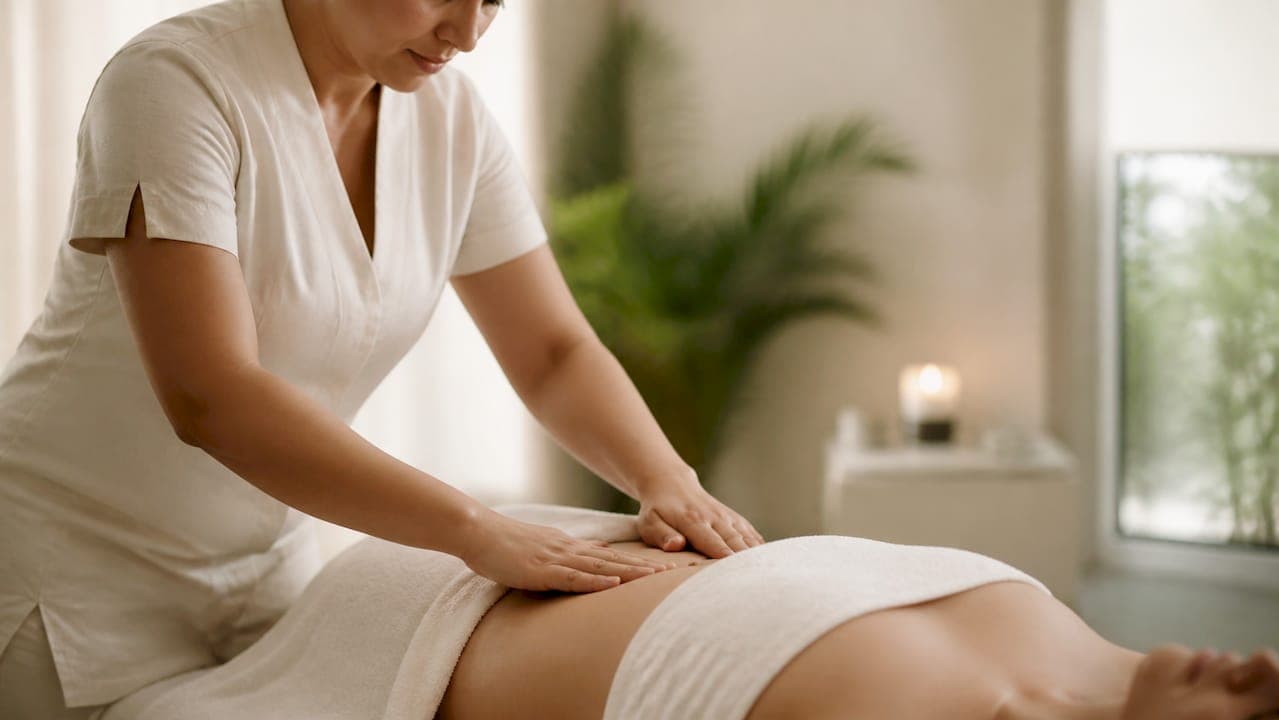
Yes, but only for a specific kind of bloating. Lymphatic drainage can reduce the puffy, fluid-based fullness that comes from water retention or post-surgical edema. It will not touch bloating from gas, constipation, or trapped digestive air, and it will not melt fat. The technique works by encouraging trapped interstitial fluid to move back toward your lymph nodes and into general circulation, which is why the relief is often visible within a day.
Here's a quick way to tell which type you're dealing with:
- Fluid-related bloating feels soft and puffy, shifts with your sodium intake or menstrual cycle, and eases somewhat with movement.
- Digestive bloating feels firm or tender, often comes with gas or irregular bowel habits, and doesn't respond much to walking around.
Pro Tip: Press gently on your shin or lower abdomen for a few seconds. If a slight dent lingers (mild pitting), or if your ankles look swollen by evening, that points toward fluid retention rather than a digestive issue.
Key Takeaways
Lymphatic drainage reduces bloating caused by fluid retention or post-surgical swelling, but it does not resolve gas, constipation, or fat-related fullness.
| Point | Details |
|---|---|
| Identify the bloating type first | Soft, fluctuating puffiness suggests fluid retention; firm, painful distension points to a digestive cause. |
| Expect temporary results | Visible de-puffing often shows within a day but typically fades within a few days without follow-up care. |
| Get clearance for certain conditions | Heart failure, active infection, blood clots, and kidney failure all require medical review first. |
| Pair sessions with daily habits | Walking, hydration, sodium moderation, and gentle self-massage extend results between appointments. |
| House of Wellness offers screened, combined protocols | Sessions include pre-treatment screening and can pair MLD with radiofrequency for fuller results. |
This article is general information, not a substitute for advice from a qualified doctor. Consult a qualified healthcare professional about your own circumstances before acting on anything here.
Table of Contents
- What Is Manual Lymphatic Drainage for Bloating?
- Which Types of Bloating Respond to Lymphatic Drainage?
- What Techniques and Services Are Available in Singapore?
- What to Expect in a Session, and What It Costs in Singapore
- At-Home Techniques That Support Lymph Flow
- When Should You Avoid Lymphatic Drainage Massage?
- What Does the Research Say About Lymphatic Drainage for Bloating?
- A Local, Honest Take on Lymphatic Drainage for Bloating
- Try Lymphatic Drainage at House of Wellness in Singapore
- Sources
What Is Manual Lymphatic Drainage for Bloating?
Manual lymphatic drainage (MLD) is a gentle, rhythmic technique that uses light, directional strokes to stretch the skin and stimulate movement in the superficial lymphatic vessels sitting just under it. It is not the same as a deep-tissue massage. There's no kneading, no deep pressure, and no fast pace. Therapists work slowly, following the natural drainage pathways toward your lymph nodes in the neck, armpits, or groin.
The lymphatic system's real job is returning excess interstitial fluid to your bloodstream and supporting immune surveillance, not flushing out toxins the way wellness marketing sometimes suggests. MLD is a clinically recognized therapy for lymphedema and post-surgical swelling precisely because it moves fluid, not because it purges anything.
When you're vetting a provider in Singapore, ask about:
- Certified MLD training (Vodder-method or CMLDT certification)
- A background in physiotherapy or osteopathy, especially for medical cases
- Experience treating post-surgical or lymphedema clients, not just cosmetic bookings
| Point | Details |
|---|---|
| MLD is gentle, not deep | Light, slow, directional strokes distinguish it from sports or deep-tissue massage. |
| Lymph moves fluid, not toxins | Its role is fluid return and immune function, not detoxification. |
| Credentials matter | Look for Vodder-trained or CMLDT-certified therapists for genuine technique fidelity. |
Which Types of Bloating Respond to Lymphatic Drainage?
Bloating driven by fluid buildup is the category MLD actually addresses. If your symptoms match one of these, a session is worth considering:
- Sodium-driven water retention after a salty meal or a big night out
- Cyclical bloating tied to the late luteal phase of your menstrual cycle
- Post-surgical swelling following abdominal or cosmetic procedures
- Puffiness from prolonged sitting, long-haul flights, or standing all day
Now the causes MLD won't meaningfully change:
- Gas and trapped air from certain foods or eating too quickly
- Constipation or slow bowel transit
- IBS-related distension
- Visceral fat or an underlying organ issue (ovarian cysts, liver disease)
One review of clinical outcomes found MLD reliably reduces edema after abdominal surgery but showed no durable effect on waist circumference or body fat outside those inflammatory or post-operative contexts. That distinction is the whole ballgame: soft, fluctuating, puffy bellies tend to respond; hard, tender, gas-driven ones don't.
Certain symptoms mean you should see a doctor before booking anything: severe abdominal pain, fever, unexplained weight loss, or distension that doesn't ease over several days. Those aren't lymphatic problems, and no amount of massage will fix them.
What Techniques and Services Are Available in Singapore?
Clinics and spas across Singapore offer a few distinct approaches, and knowing the difference helps you ask better questions at booking.
-
Manual lymphatic drainage (MLD) uses hands-only, light, directional strokes and is the gold-standard technique for genuine fluid movement.
-
Pneumatic compression devices use inflatable sleeves or wraps to apply rhythmic pressure, often paired with manual work for post-op or chronic lymphedema cases.
-
Combined aesthetic protocols pair MLD with technologies like radiofrequency or cryotherapy, which can support skin tightening and temporary de-puffing alongside fluid drainage.
Clinical combinations, like compression plus MLD, are typically reserved for post-surgical patients or those managing lipedema or chronic lymphedema. Cosmetic bookings for temporary bloating or puffiness are a different, lower-stakes use case, and it's worth being clear with your therapist about which one you're there for.
What to Expect in a Session, and What It Costs in Singapore
A typical session opens with a short consultation covering your medical history, any recent surgeries, and medications. The therapist checks your neck, armpit, and groin areas since these hold the lymph nodes fluid needs to reach, then works through targeted strokes on your abdomen or wherever you're retaining fluid. You'll get brief aftercare advice on hydration and movement before you leave.
- Session length typically runs 30 to 90 minutes. Shorter sessions focus on one area (face or abdomen); longer ones cover full-body drainage.
- Frequency depends on your goal: one session handles a one-off event like a flight or a salty weekend, one to two monthly sessions suit cyclical hormonal bloating, and weekly visits are reserved for clinical cases under medical guidance.
- Pricing in Singapore generally reflects session length and whether it's bundled with add-ons like radiofrequency, with many clinics offering discounted intro sessions or package rates.
Before your appointment, have ready: your medical history, details of any recent surgery, current medications, and any compression garments you've been prescribed.
At-Home Techniques That Support Lymph Flow
Between sessions, a few daily habits keep fluid moving and can extend what an MLD appointment does for you.
- Spend 5 to 10 minutes on gentle self-massage, always stroking toward your nearest lymph nodes, neck for facial puffiness, groin for legs.
- Take a brisk 15 to 20 minute walk or do a few minutes of deep belly breathing daily; muscle contraction and diaphragm movement both help push lymph fluid along.
- Watch your sodium intake, stay hydrated, and skip tight waistbands right after meals.
Tools like gua sha and dry brushing are low-risk and popular on social media, but the benefit is modest at best. If you use them, keep the pressure light and follow the same "toward the nodes" direction. Clinical guidance also supports combining MLD with walking, hydration, and compression garments to prolong results. Stop immediately if you notice pain, redness, or unusual swelling.
When Should You Avoid Lymphatic Drainage Massage?
Certain conditions make lymphatic stimulation genuinely risky, not just inadvisable. Congestive heart failure, active infection, blood clots, and uncontrolled kidney failure all fall into this category, because moving extra fluid into circulation can overload a system that's already struggling to manage it.
Other situations call for caution rather than an outright ban:
- Active cancer treatment (requires oncology clearance first)
- Untreated cellulitis or acute skin inflammation
- Recent major surgery without a doctor's sign-off
A good clinician will ask about your medical history, current medications, and any recent test results before starting. If you develop fever, sudden increased pain, or rapid swelling during a course of treatment, stop and seek medical care right away.
Pro Tip: If you're on blood thinners, have a pacemaker, or are pregnant, mention it upfront. Most therapists will still work with you, just with modified pressure and areas avoided.
What Does the Research Say About Lymphatic Drainage for Bloating?
The evidence is solid for clinical uses and considerably thinner for cosmetic ones. MLD is well-supported for lymphedema and post-surgical swelling. It's plausible, though less rigorously studied, for everyday fluid-retention bloating. It is not supported as a fat-loss method or a general "detox," despite how often it's marketed that way.
Lymphatic experts, including Dr. Stanley Rockson, stress that the lymphatic system moves fluid and cellular waste rather than functioning as a toxin-clearing weight-loss organ, and marketing claims promising cleansing or fat loss go well beyond what the science supports.
In practical terms: expect visible de-puffing that can last hours to a few days, not weeks. Healthline's review of the evidence notes any "slimming" effect people report is fluid redistribution, never fat loss. The research gap that remains is a lack of large randomized trials specifically testing MLD for routine cosmetic de-bloating, so most of what we know comes from clinical (surgical and lymphedema) populations rather than everyday bloating.
A Local, Honest Take on Lymphatic Drainage for Bloating
Singapore's humidity, long commutes, and salt-heavy hawker fare make fluid retention a near-daily reality for a lot of clients we see. What we'd tell you honestly: MLD works well for that kind of puffiness, and it feels genuinely good, but it's not a shortcut around digestion issues or weight loss. Book an initial session to see how your body responds, and get medical clearance first if any of the contraindications above apply to you.
Try Lymphatic Drainage at House of Wellness in Singapore
If your bloating shows up after salty meals, long flights, or the week before your period, targeted lymphatic drainage massage at House of Wellness addresses exactly that kind of fluid buildup, without the upsell pressure common at larger aesthetic chains.

Our therapists screen for the contraindications covered above before your first session, then build a protocol around your goals. That might mean standalone MLD, or pairing it with radiofrequency for skin tightening alongside de-puffing. For clients who want a fuller reset, the 90-minute skinwork and relaxation session combines lymphatic technique with broader body treatment in one appointment. First-timers should come with a brief medical history in mind (any recent surgery, medications, or diagnosed conditions) so we can tailor pressure and focus areas safely. Ready to see how your body responds? Book your session and tell us what's bothering you most.
Sources
- What lymphatic drainage massage actually does for your body | National Geographic
- Lymphatic drainage massage | Cleveland Clinic
- Can lymphatic drainage massage help reduce weight and bloating? | Healthline
- Do you need lymphatic drainage for swelling or bloating? | UHealth (University of Miami Health)