
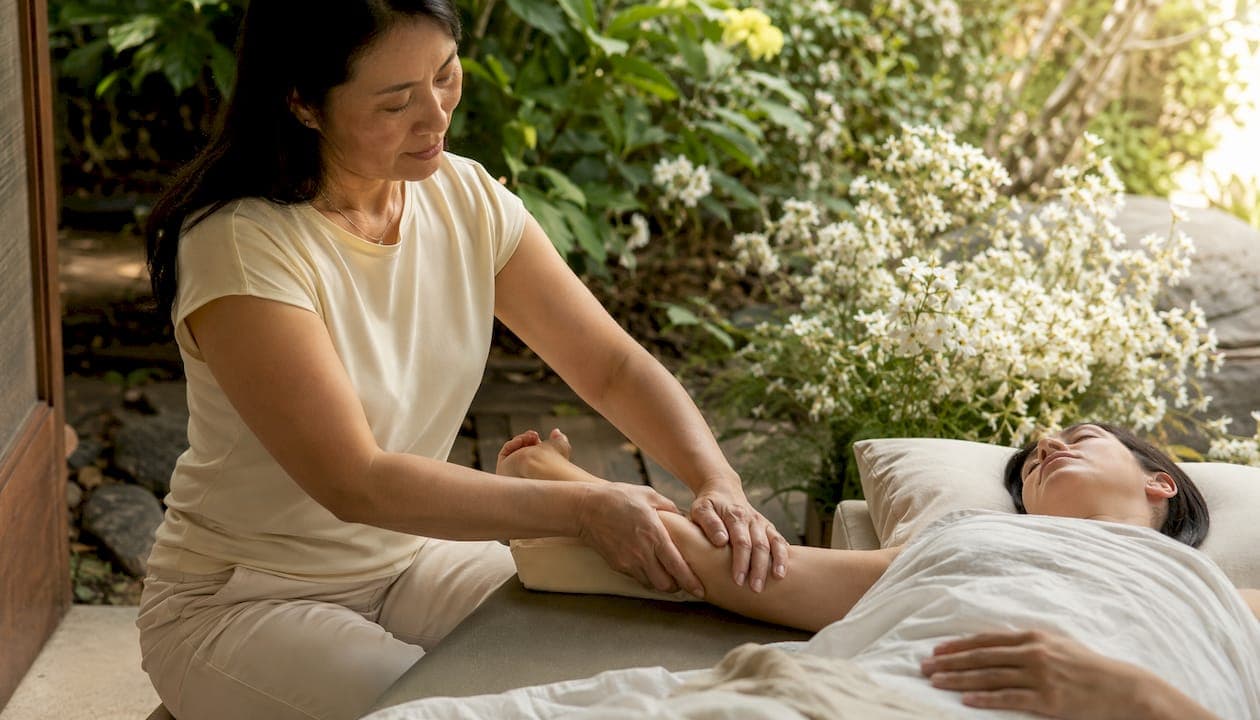
Lymphatic drainage massage reliably reduces swelling and supports post-surgical recovery in people with lymphatic impairment. For healthy people, the strongest documented benefits are temporary depuffing and genuine relaxation. Those who gain the most include people with diagnosed lymphedema, post-operative patients with clinician clearance, selected athletes, and anyone seeking short-term facial puffiness reduction. UCLA Health confirms that manual lymphatic drainage (MLD) is most effective when the lymphatic system is blocked or impaired. National Geographic notes that any puffiness improvements in healthy people are typically transient, often lasting 4–6 hours. Houseofwellnesssg integrates MLD with microcurrent and radiofrequency techniques for clients seeking both clinical and aesthetic results in Singapore.
- Who benefits most: People with lymphedema, post-op swelling, sports-related fluid retention, or those wanting temporary facial depuffing and relaxation
- Timeline: Some puffiness reduction may appear after a single session; sustained clinical benefit for swelling usually requires multiple sessions over days to weeks
- Safety note: Contraindications include active infection, deep vein thrombosis (DVT), uncontrolled heart failure, and certain active cancers. Get medical clearance when any of these apply
Lymphatic drainage massage is a fluid-management therapy with real clinical uses. The "detox" framing is popular, but the strongest evidence supports its role in reducing swelling and improving comfort for people with impaired lymphatic function.
Table of Contents
- What is lymphatic drainage massage and how does it work?
- What types of lymphatic drainage techniques are available?
- What does lymphatic drainage actually do? Benefits ranked by evidence
- Who should try it, and when should you get medical clearance first?
- What happens in a session, and how long before you see results?
- How to find a qualified therapist in Singapore
- What the research actually says, and which claims to ignore
- Key Takeaways
- The case for honest expectations
- Lymphatic drainage at Houseofwellnesssg
- Useful sources for further reading
What is lymphatic drainage massage and how does it work?
Manual lymphatic drainage is a very light, rhythmical skin-stretching technique designed to encourage fluid movement through the superficial lymphatic vessels. Unlike deep tissue massage, MLD uses gentle, directional strokes that target the lymph vessels sitting just beneath the skin, nudging fluid toward functioning lymph nodes where it can be processed and returned to circulation.
The mechanism is straightforward. Lymph vessels lack the muscular pump that blood vessels have, so they rely on movement, breathing, and external stimulation to keep fluid flowing. Light, sequenced strokes mimic that natural pumping action. They also activate the parasympathetic nervous system, which is why many people feel deeply calm during and after a session.
The clinical goal versus the wellness claim are different things. Clinically, MLD manages fluid when the lymphatic system is compromised. The popular wellness framing, which promises permanent detox or weight loss for healthy people, is not supported by the evidence.
- MLD targets superficial lymphatics, not deep muscle tissue
- Strokes are directional, always moving toward active lymph node clusters
- The technique stimulates parasympathetic relaxation alongside fluid movement
- Clinical use focuses on fluid management; wellness use focuses on temporary depuffing and relaxation
Pro Tip: If a therapist uses heavy kneading pressure during what they call "lymphatic drainage," that is not MLD. Effective technique works by skin stretch, not deep compression. Heavy pressure can actually collapse superficial lymph capillaries and reduce effectiveness.
What types of lymphatic drainage techniques are available?
The term "lymphatic drainage" covers several distinct approaches, and knowing the difference helps you choose the right one.
Manual lymphatic drainage (MLD) is the gold-standard clinical method, developed through the Vodder and Földi training systems. It is performed by certified lymphedema therapists or physiotherapists with specialized lymphedema training. Sessions are hands-on, oil-free, and use precise sequenced strokes. This is the appropriate choice for diagnosed lymphedema, post-surgical recovery, and any condition requiring clinical oversight.
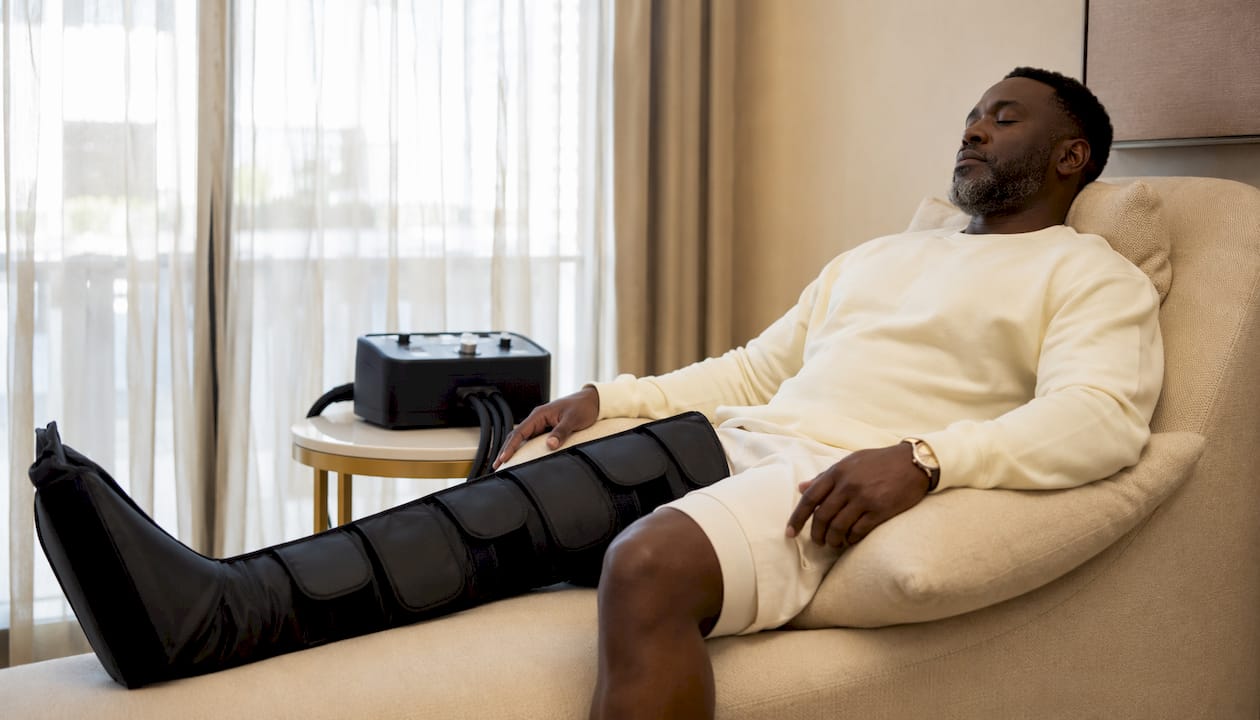
Pneumatic compression devices use inflatable sleeves or garments that rhythmically compress the limbs to move lymph fluid. They are often used alongside MLD in clinical settings, particularly for lymphedema maintenance between therapy sessions.
Machine-assisted and device-led methods include tools used in aesthetic clinics that combine suction, vibration, or pressure to stimulate lymph flow in the face and body. These are typically performed by trained estheticians and are suited to wellness and cosmetic goals rather than clinical lymphedema management.
Facial gua sha and jade rollers are self-care tools that can encourage mild lymphatic movement in the face when used with correct upward and outward strokes. Their effects are gentle and temporary.
For clinical cases, therapist credentials matter as much as the technique itself. UCLA Health notes that MLD performed by certified lymphedema therapists or physiotherapists with lymphedema training is the standard for clinical management.
Credential signals to look for:
- Certified Lymphedema Therapist (CLT) designation
- Physiotherapist with post-graduate lymphedema training
- Vodder or Földi method certification for clinical MLD
- For facial and aesthetic work: trained esthetician with documented MLD coursework
After surgery, device intensity and session timing must follow your surgical team's guidance. Starting MLD too early can disrupt healing.
What does lymphatic drainage actually do? Benefits ranked by evidence
The strongest evidence supports MLD for reducing lymphedema and post-operative swelling. Beyond that, benefits exist on a spectrum from well-documented to preliminary.
-
Lymphedema and chronic swelling reduction. This is where the clinical evidence is clearest. MLD is a standard component of complete decongestive therapy for lymphedema, helping reduce limb volume and improve quality of life. UCLA Health confirms MLD is effective when the lymphatic system is blocked or impaired.
-
Post-operative recovery. Clinicians observe reduced bruising, faster resolution of edema, and improved patient comfort after cosmetic procedures including liposuction, facelifts, and breast surgery. Everyday Health reports that clinicians note improved skin elasticity and reduced post-operative swelling, though high-quality randomized trials remain limited. Clinicians report better patient satisfaction when MLD is used as part of a bundled protocol combining massage, compression, and movement.
-
Temporary facial and limb depuffing. For healthy people, MLD can visibly reduce puffiness by redistributing fluid. The effect is real but short-lived. National Geographic experts put the typical window at 4–6 hours for most healthy clients.
-
Relaxation and nervous system calming. Cedars-Sinai notes that MLD can calm the nervous system and produce measurable relaxation effects, including temporary reductions in heart rate and blood pressure, even in healthy people. This is one of the most consistent benefits across populations.
-
Adjunct support for chronic conditions. WebMD notes that MLD may benefit people with chronic venous insufficiency, rheumatoid arthritis, and fibromyalgia, though evidence varies by condition and MLD works best as part of a broader care plan.
What MLD does not do: It does not flush toxins from a healthy body, produce lasting fat loss, or permanently reshape the body. Visible sculpting after a session is fluid redistribution, not fat reduction.
Pro Tip: For post-procedure use, coordinate your MLD timing with your surgeon and pair sessions with compression garments as recommended. Starting too early or skipping compression can reduce results and increase seroma risk.
Who should try it, and when should you get medical clearance first?
MLD is gentle enough for most people, but certain conditions make it risky without professional screening.
Ideal candidates:
- People with diagnosed lymphedema or secondary swelling from cancer treatment
- Post-operative patients who have received clearance from their surgeon or physiotherapist
- Athletes managing fluid retention or seeking faster recovery between training sessions
- Clients wanting temporary facial depuffing, improved skin appearance, or deep relaxation
Contraindications — avoid or get clearance first:
- Active infection or cellulitis: MLD increases fluid circulation, which can spread infection
- Deep vein thrombosis (DVT): Moving fluid around a clot risks dislodging it
- Uncontrolled heart failure: Increased venous return can overload a compromised heart
- Active systemic cancer without oncologist clearance: Stimulating lymph flow near active tumors requires specialist guidance
- Open wounds or recent surgical sites: Direct massage over unhealed tissue is contraindicated
Cleveland Clinic advises that MLD must be coordinated with surgical protocols and compression therapy for post-operative patients — it complements but does not replace compression garments.
When to seek urgent care instead of a massage: sudden unilateral swelling with warmth and pain, fever alongside swelling, or any new swelling that appears rapidly. These signs need medical evaluation before any manual therapy.
A reputable clinic should screen you for contraindications before your first session, ask about recent surgeries and current medications, and request written medical clearance if you have any of the red-flag conditions above.
What happens in a session, and how long before you see results?
Sessions are gentle and typically run a variable duration depending on the area treated and the clinical goal. You will feel light, rhythmic pressure, more like a slow, deliberate skin stretch than a traditional massage. Most people find it deeply relaxing, sometimes to the point of drowsiness.
| Timeframe | What you may notice |
|---|---|
| During and immediately after | Reduced puffiness, lighter feeling, deep relaxation |
| Post-session period | Temporary depuffing, improved skin appearance in healthy clients |
| After multiple sessions | Measurable swelling reduction when combined with compression (clinical cases) |
| Ongoing maintenance | Monthly or as advised by your therapist for lymphedema management |
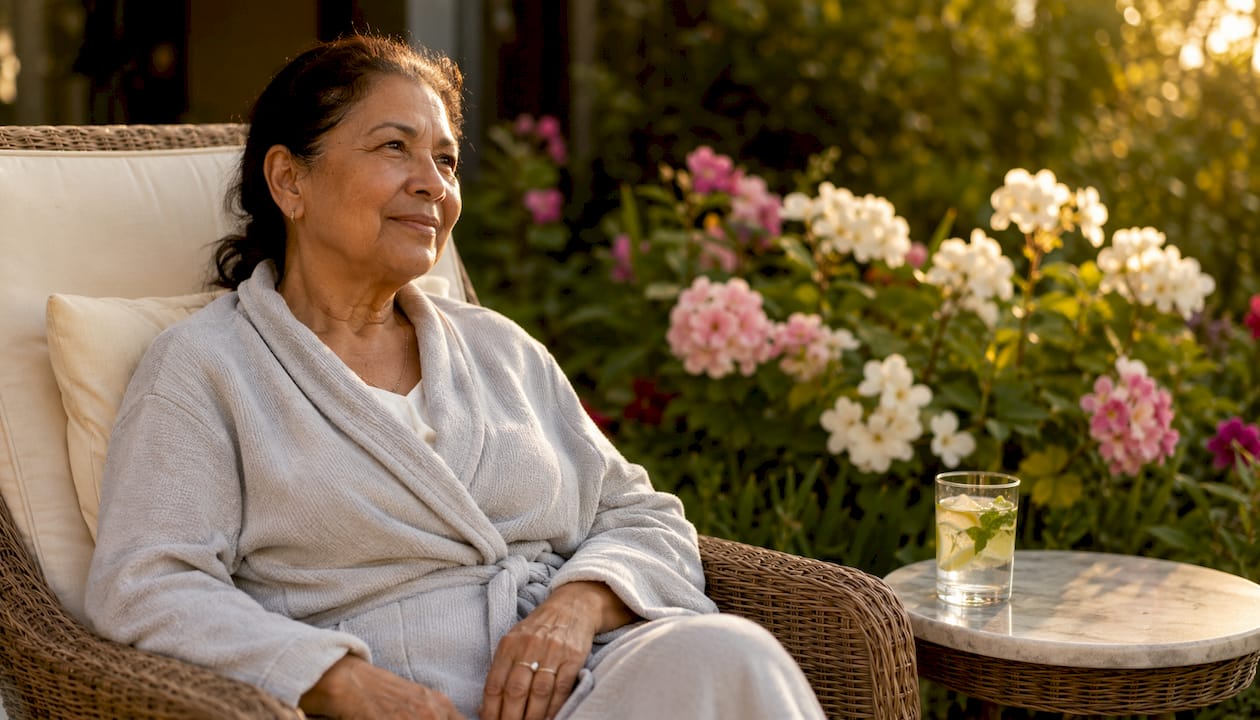
Everyday Health notes that some clients notice immediate visible effects after a single session, with fuller results building across multiple treatments. For clinical lymphedema, meaningful limb volume reduction requires repeated therapy and objective monitoring over weeks.
After your session:
- Drink water to support fluid movement
- Gentle walking or light activity helps maintain lymph flow
- Avoid heavy heat exposure immediately after post-operative sessions
- Wear compression garments if your therapist or surgeon has prescribed them
The honest timeline: one session can leave you looking and feeling noticeably lighter. Sustained clinical change takes a course of treatment, not a single appointment.
How to find a qualified therapist in Singapore
Singapore has a growing number of clinics and wellness centers offering lymphatic drainage, but quality varies. For clinical needs, a certified lymphedema therapist or a physiotherapist with MLD training is the right starting point. For facial and aesthetic goals, a trained esthetician with documented MLD coursework is appropriate.
Questions to ask before you book:
- Are you certified in MLD, and through which training program (Vodder, Földi, or equivalent)?
- Do you work with surgeons or physiotherapists for post-operative care?
- What is your experience with lymphedema or cosmetic post-op recovery?
- Do you use oils or creams during the session? (Clinical MLD is typically performed without oils, which can interfere with skin stretch technique.)
- What screening do you do before the first session?
Approximate price ranges in Singapore (estimates):
- Facial lymphatic drainage at a wellness spa: SGD 80–180 per session
- Full-body MLD at a physiotherapy or specialist clinic: SGD 120–250 per session
- Clinician-led lymphedema therapy (physiotherapist): SGD 150–300 per session
These are general estimates. Prices vary by provider, session length, and whether the treatment is part of a package. Houseofwellnesssg's lymphatic drainage suit service page lists current session options and pricing for Singapore clients.
What the research actually says, and which claims to ignore
The evidence for MLD is strongest where the lymphatic system is impaired. For healthy people, the benefits are real but modest and temporary.
Myth vs. fact:
- "MLD detoxes your body." The lymphatic system does move cellular waste and excess fluid, but in healthy people it does this continuously without manual intervention. National Geographic summarizes expert views that MLD stimulates fluid movement but does not clear harmful toxins in any clinically meaningful way for healthy individuals.
- "Lymphatic massage causes permanent slimming." Any visible change after a session is fluid redistribution, not fat loss. UCLA experts confirm that sculpting effects are temporary.
- "It boosts your immune system." The lymphatic system is part of immune function, but there is no strong clinical evidence that MLD produces lasting immune enhancement in healthy people.
- "One session is enough." For clinical conditions, a single session is a starting point, not a treatment. Meaningful results for lymphedema require a structured course.
The practical implication: MLD works best as part of a broader approach. Cedars-Sinai recommends pairing any massage therapy with exercise, deep breathing, and good hydration as the foundation of lymphatic health. Massage is a useful addition to that foundation, rarely a standalone fix.
Key Takeaways
Lymphatic drainage massage delivers its strongest, most reliable benefits when the lymphatic system is impaired; for healthy people, temporary depuffing and relaxation are the realistic, evidence-supported outcomes lasting a few hours.
| Point | Details |
|---|---|
| Strongest clinical use | MLD reliably reduces swelling and improves comfort in lymphedema and post-surgical recovery. |
| Healthy-person benefit | Temporary puffiness reduction and measurable relaxation are the main-documented effects, lasting roughly 4–6 hours. |
| Contraindications matter | Active infection, DVT, uncontrolled heart failure, and active cancer require medical clearance before any session. |
| Combine for best results | Pairing MLD with compression garments, exercise, and hydration produces better outcomes than massage alone. |
| Book in Singapore | Houseofwellnesssg integrates lymphatic drainage with microcurrent and radiofrequency for personalized facial and body recovery sessions. |
The case for honest expectations
Most people come to lymphatic drainage massage having seen before-and-after photos on social media, usually dramatic facial depuffing credited entirely to a single session. The results are real. The framing is often misleading.
What those images rarely show is the compression garment worn overnight, the hydration protocol, the gentle movement, and the fact that the same face looked similar again by the following evening. MLD is genuinely useful. It is one of the few massage modalities with a clear clinical mechanism and a documented role in post-surgical care. But it works best when you treat it as part of a system, not a shortcut.
The wellness industry has a habit of taking a legitimate clinical tool and inflating its scope until it sounds like a cure-all. The honest version of lymphatic drainage is actually more compelling: a gentle, evidence-backed technique that reduces swelling, calms the nervous system, and supports recovery when used correctly and consistently. That is worth booking. It just does not need the detox mythology attached to it.
Lymphatic drainage at Houseofwellnesssg
Fewer things feel as immediately restorative as a well-executed lymphatic drainage session paired with complementary therapies. At Houseofwellnesssg in Tanjong Pagar, Singapore, lymphatic drainage is integrated into personalized wellness sessions alongside microcurrent sculpting, radiofrequency body treatments, and cryotherapy, so your session addresses fluid balance, skin tone, and deep relaxation in one visit.
Every booking begins with a brief screening conversation to check for contraindications and understand your goals, whether that is post-procedure recovery, facial depuffing, or simply a deeply restorative treatment. Sessions run from focused 70-minute appointments to 90-minute integrated treatments that combine lymphatic techniques with advanced skincare. There is no pressure to purchase products or upgrade mid-session. You come in, you are cared for, and you leave feeling lighter. To see the full range of services or to reserve your session, visit houseofwellnesssg.com/services.
Useful sources for further reading
These sources were used to build this article and are worth bookmarking if you want to go deeper into the evidence.
| Source | Why it's useful |
|---|---|
| UCLA Health | Clear clinical overview of when MLD is and is not indicated; good for understanding mechanism |
| Cleveland Clinic | Practical post-surgical guidance and contraindication list |
| Cedars-Sinai | Covers relaxation effects and lifestyle foundations for lymphatic health |
| National Geographic | Balanced expert summary that addresses the detox myth directly |
| Everyday Health | Accessible overview of cosmetic and post-procedure applications |
| WebMD | Condition-by-condition benefit summary with evidence notes |
For Singapore-specific booking, session details, and clinician-led lymphatic treatments, the Houseofwellnesssg services page is the most practical local starting point. Always confirm contraindications with a qualified clinician before booking if you have an active health condition. This article is general wellness information, not medical advice. For your specific situation, consult a physiotherapist, certified lymphedema therapist, or your treating physician.