
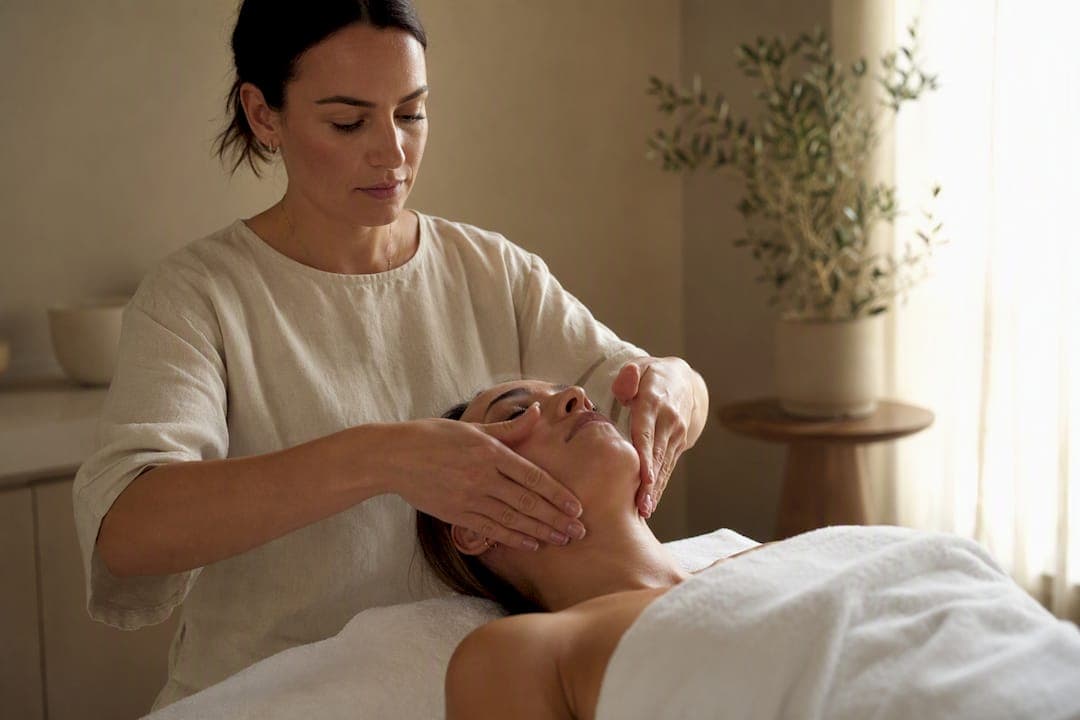
Yes, gentle lymphatic drainage and sinus massage can often ease congestion and facial pressure within minutes, when you use light pressure and the right technique. It is not a fix for everything, though, and it is not safe for every situation.
Skip self-massage if you have a fever, an active sinus infection, facial trauma, or a bleeding or clotting disorder. Otherwise, you can test the waters with a single point for 5 to 10 seconds and see how your body responds.
- Try one pressure point first, hold it lightly, and stop immediately if pain, dizziness, or nausea shows up.
- If you feel relief and no adverse signs, move on to the full routine below.
- If nothing improves after a few tries, or symptoms worsen, that is your cue to call a healthcare provider rather than keep pressing.
Key Takeaways
Gentle lymphatic drainage and sinus massage relieve congestion and facial pressure in the short term by moving trapped fluid toward the neck's lymph nodes, but the effect is temporary and works best alongside medical care for chronic cases.
| Point | Details |
|---|---|
| Start with one point | Test a single pressure point for 5 to 10 seconds before running the full routine. |
| Skip it during infection | Avoid massage with fever, acute infection, facial trauma, or clotting disorders. |
| Relief is short-lived | A 2024 study found immediate improvement that faded by 10 days, so repeat sessions help. |
| Watch for red flags | Stop for dizziness, nausea, worsening pain, or vision changes, and seek care. |
| Professional sequencing helps | Houseofwellnesssg's lymphatic drainage sessions prepare the neck before facial work for deeper relief. |
Table of Contents
- What Lymphatic Drainage Actually Does for Sinus Pressure
- How Do You Massage Your Sinuses for Drainage at Home?
- When Should You Avoid Sinus Massage?
- How Long Does Sinus Massage Relief Actually Last?
- What Does a Professional Lymphatic Session Involve?
- What Does the Clinical Evidence Actually Show?
- Why the "Quick Fix" Framing Around Sinus Massage Misses the Point
- Book a Lymphatic Session Instead of Guessing at Home
- Frequently Asked Questions
- Sources
What Lymphatic Drainage Actually Does for Sinus Pressure
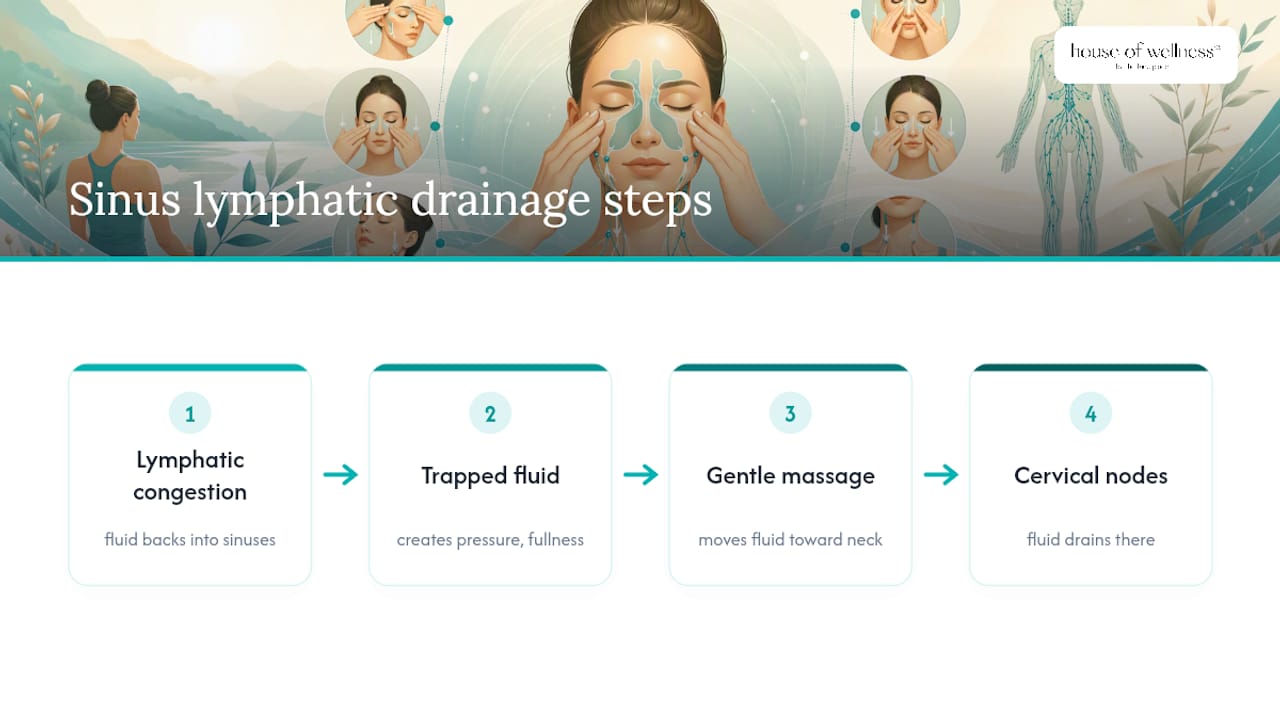
Your sinuses sit close to a network of lymphatic vessels that drain fluid from the face into lymph nodes along the neck. When those channels get congested from inflammation or a cold, fluid backs up around the sinus cavities, which is what you feel as pressure and fullness. Gentle massage encourages that trapped interstitial fluid to move toward the cervical nodes, easing local swelling and helping mucociliary clearance, the process your nasal lining uses to sweep out mucus and debris.
This is worth saying plainly: lymphatic drainage is not a full-body "detox." Specialists in lymphatic physiology are clear that these techniques move fluid locally and temporarily. They do not flush toxins from your organs or trigger long-term hormonal shifts, whatever certain wellness marketing implies.
There is also a biological reason drainage-focused techniques make sense for people with chronic sinus issues. Research on nasal mucosal lymphatics shows that tissue affected by chronic rhinosinusitis often has a noticeably lower density of lymphatic vessels than healthy tissue, which likely slows fluid clearance and feeds ongoing inflammation. That gives self-massage and manual lymphatic drainage a real physiological target, even though it works alongside medical care rather than instead of it.
How Do You Massage Your Sinuses for Drainage at Home?
Set yourself up before you touch your face. Sit upright rather than lying down, since gravity helps fluid move toward your neck. Drink a glass of water first, since well-hydrated lymph fluid flows more easily than thick, sluggish fluid, and a warm washcloth over your face for a minute or two will relax tight tissue and make the massage more comfortable.
Here is a short routine built around five techniques recommended by Cleveland Clinic, using very light pressure throughout. Never press hard enough to hurt.
- Frontal sinus pressure point. Place two fingers just above your inner eyebrows, at the ridge of your forehead. Press lightly and hold for 5 to 10 seconds, then release.
- Frontal sinus pinch. Pinch the bridge of your nose gently between your thumb and index finger for 5 to 10 seconds.
- Maxillary sinus pressure point. Find the small divots beside your nostrils, just below your cheekbones, and press lightly for 5 to 10 seconds.
- Maxillary sweep. From those same divots, sweep your fingers outward along your cheekbones toward your ears, using a light dragging motion, three to five times per side.
- Frontal sweep. Starting at the center of your forehead, sweep outward toward your temples and down toward your ears, three to five times.
Run through the full sequence once, then repeat a second time if you feel relief building rather than fading. The whole routine takes under five minutes.
Pro Tip: Always work from the center of your face outward toward your ears and neck. That direction follows the natural path lymph fluid takes toward the cervical nodes, so sweeping the "wrong way" can work against you rather than for you.
Stop right away if you feel dizziness, nausea, or a sharp increase in pain anywhere during the routine. Those signals usually mean the tissue is more inflamed than gentle massage can handle that day.
When Should You Avoid Sinus Massage?
Self-massage is not appropriate for everyone, and skipping this section is how people turn a mild annoyance into a real problem.
- Skip it entirely if you have a fever, a diagnosed acute sinus infection, recent facial trauma or surgery, or a clotting disorder.
- Avoid it if you have severe uncontrolled cardiac or kidney disease, since even mild lymphatic stimulation can matter more for those conditions.
- Get urgent medical attention for vision changes, severe pain on just one side of your face, a high fever, or swelling that spreads quickly. None of those are massage-fixable.
If dizziness, nausea, or worsening localized pain shows up mid-massage, stop immediately. That response usually means the tissue is too inflamed for manual pressure right now. Safer first moves in that case are a saline rinse, a warm compress, and a call to your primary care provider or an ENT if symptoms persist.
How Long Does Sinus Massage Relief Actually Last?
Relief from a single self-massage session tends to last hours rather than days, which is worth knowing before you expect a permanent fix from five minutes of pressing on your face.
- A 2024 prospective study found that osteopathic manipulation focused on lymphatic drainage produced statistically significant immediate relief for congestion, postnasal drainage, and facial pain, but that benefit did not hold up at the 10 day mark.
- Daily self-massage, paired with saline rinses and hydration, is reasonable for ongoing mild congestion, but do not expect it to resolve a structural blockage like a deviated septum or nasal polyps.
- If your congestion keeps returning despite consistent self-care, that pattern points toward chronic uncontrolled inflammation or a structural issue that needs an ENT evaluation rather than more massage.
What Does a Professional Lymphatic Session Involve?
A trained therapist typically works in a specific order: preparing the thoracic inlet and cervical lymph chain first, then moving to gentle facial strokes around the sinuses. That sequence matters because opening the downstream pathway before working the face gives fluid somewhere to go, rather than just pushing it around locally. A full session usually runs 45 to 60 minutes and includes light strokes along the jaw, cheeks, and forehead.
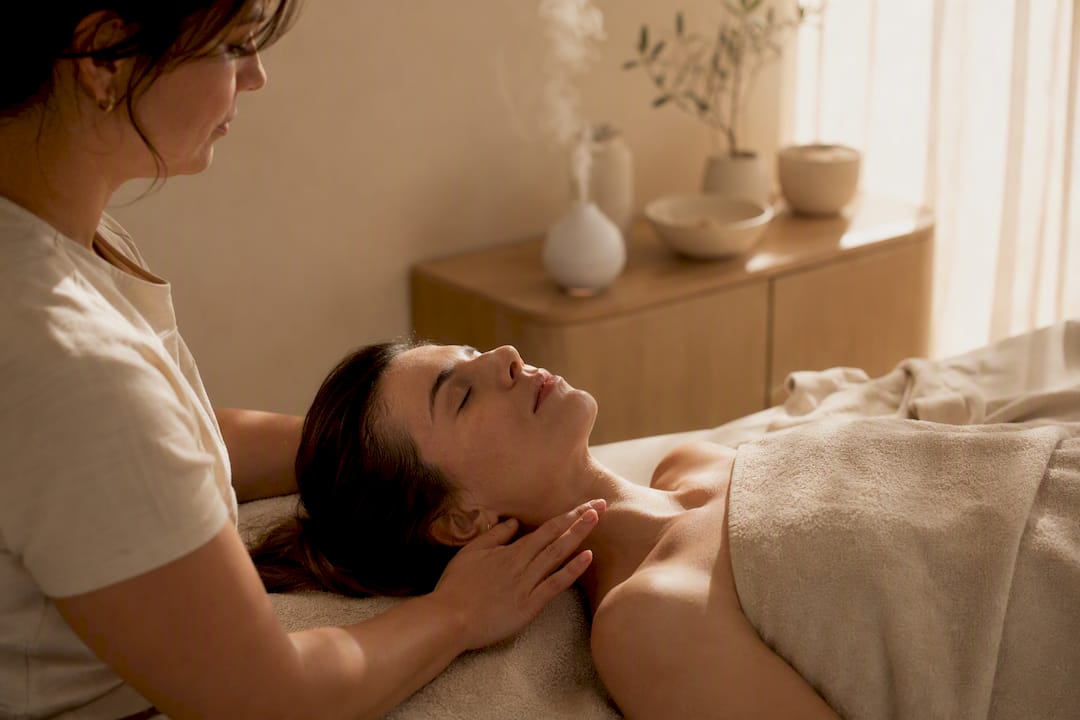
Beyond the physical drainage effect, these sessions tend to lower stress markers. Lymphatic massage can transiently reduce heart rate and blood pressure, which matters if stress is part of what keeps your sinus symptoms flaring.
Houseofwellnesssg offers lymphatic drainage massage built around this same sequenced approach, alongside complementary treatments like microcurrent facial therapy and light-pressure work suited to the delicate eye and cheek area, similar to what you'd get from an eye brightening treatment.
Before booking with anyone, ask a few direct questions:
- What is your training in manual lymphatic drainage specifically?
- How do you sequence the session, and why?
- What should I expect to feel during and after?
| Approach | Best for |
|---|---|
| Self-massage at home | Mild, occasional congestion; quick relief between appointments |
| Professional lymphatic session | Deeper drainage work, stress reduction, guided technique |
| Combined with saline rinse and hydration | Ongoing symptom management alongside either approach |
What Does the Clinical Evidence Actually Show?
The strongest direct evidence comes from a 2024 prospective, single-blinded study of 43 patients with chronic rhinosinusitis who received osteopathic manipulative treatment centered on lymphatic drainage. Researchers recorded statistically significant immediate improvements in congestion, drainage, and facial pain right after treatment, but those gains had faded by the 10 day follow-up.
That timeline lines up with what practitioners see clinically: real, immediate relief that does not necessarily stick around without repeat sessions or complementary care.
The evidence supports lymphatic drainage as a genuine adjunct for short-term symptom relief in chronic rhinosinusitis, not as a standalone cure.
Separately, broader reviews of manual lymph drainage techniques in rehabilitation contexts note the overall research base is still thin, with few high-quality randomized trials. Anatomical studies add a plausible mechanism, showing reduced lymphatic vessel density in chronically inflamed sinus tissue, but plausibility is not the same as proof of long-term benefit.
- Best-supported use: short-term symptom relief alongside standard care.
- Weakest support: as a replacement for medically indicated treatment of structural or infectious sinus disease.
- Gap in the research: no large trials yet on repeated long-term self-massage.
Why the "Quick Fix" Framing Around Sinus Massage Misses the Point
Most articles on this topic sell sinus massage as either a miracle or a myth, and both framings miss what the actual research shows: a small, real, short-lived effect that works best as one tool among several.
The conventional advice to "just massage your sinuses when they're stuffy" skips the part that matters most, which is sequence. Working your neck and collarbone area before your face is not an optional flourish. It is the difference between moving fluid somewhere useful and just shifting it around your cheeks for a few minutes.
The bigger blind spot, though, is chronic sufferers who use massage as their only management strategy instead of pairing it with an ENT evaluation. If congestion keeps returning weekly despite good technique, that is a signal worth escalating rather than a signal to press harder. Self-massage earns its place in your routine, but it works best as a bridge, not a destination.
Book a Lymphatic Session Instead of Guessing at Home
Home massage gets you short-term relief, but a trained hand knows how to sequence the thoracic inlet, neck, and face properly, and can spot when your congestion needs more than pressure points. Houseofwellnesssg's lymphatic drainage massage sessions follow that same clinically informed sequencing, paired with a calm, unhurried setting that helps lower the stress load often tangled up with chronic sinus flare-ups.

If facial puffiness and tension travel together, as they often do, our microcurrent facial treatments can be added to the same visit for a fuller reset. Every session is customized to what your face and body actually need that day, without a sales pitch tacked onto the end. Check available times and book your session to feel the difference a properly sequenced session makes.
Frequently Asked Questions
Does lymphatic drainage help sinus congestion right away? Yes, gentle massage at the frontal and maxillary pressure points often eases congestion and facial pressure within minutes, though the relief tends to be temporary rather than permanent.
How often can you safely do sinus lymphatic drainage at home? Once or twice daily is reasonable for mild, recurring congestion, paired with hydration and saline rinses. Stop and see a provider if symptoms persist beyond a week or worsen.
Can lymphatic drainage cure chronic sinusitis? No. It can ease symptoms as an adjunct to care, but structural blockages, nasal polyps, or persistent infection need evaluation from an ENT rather than massage alone.
Is sinus massage safe during a cold? Generally yes, once you no longer have a fever. Use very light pressure and stop if you feel dizzy, nauseated, or notice pain increasing rather than easing.
What is the difference between self-massage and a professional lymphatic session? Self-massage targets the face directly, while a professional session first prepares the neck and collarbone area, giving fluid a clearer path to drain and often producing deeper, longer-lasting relief.
This article is general information, not a substitute for advice from a qualified doctor. Consult a qualified healthcare professional about your own circumstances before acting on anything here.
Sources
- The effect of osteopathic manipulative treatment on chronic rhinosinusitis (prospective study)
- Sinus Massage To Drain and Relieve Pressure
- Nasal mucosal lymphatics and their role in chronic rhinosinusitis (review)
- Can lymphatic drainage massage reduce inflammation, stress, and improve skin?