
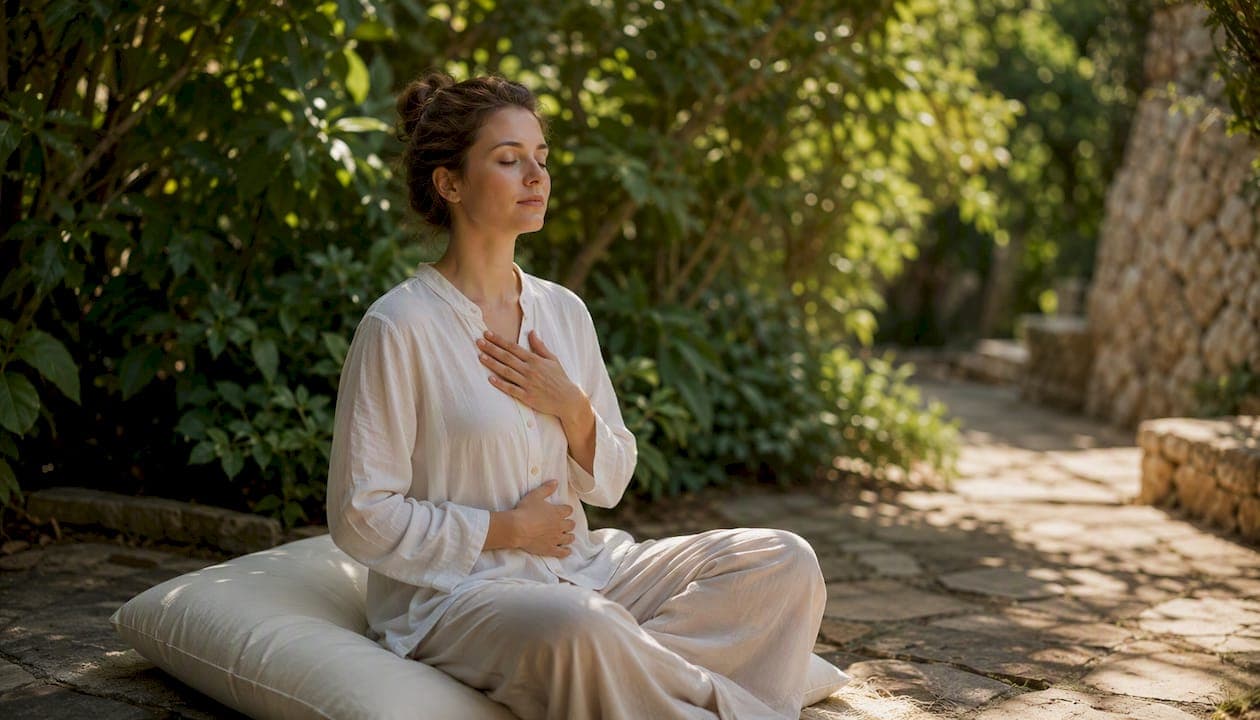
Three slow, belly breaths will lower your heart rate and calm your mind in under 60 seconds. That is not a wellness cliché. It is the starting point for every technique in this guide, and you can try it right now.
Your 60-second script:
- Sit upright or stand tall. Place one hand on your belly, one on your chest.
- Inhale slowly through your nose for 4 counts, letting your belly push outward first.
- Hold gently for 1 count.
- Exhale through your mouth for 6 counts, feeling your belly fall.
- Repeat twice more. Three breaths total.
For an instant stressful moment, the micro-version is even simpler: one long, slow exhale through pursed lips. That single breath signals your nervous system to stand down.
What to expect in the first minute: a slight softening of tension in your shoulders, a slower pulse, and a small but noticeable mental pause. You are not aiming for bliss. You are aiming for a few seconds of calm you can build on.
Pro Tip: Place your phone face-down, close your eyes, and rest your tongue on the roof of your mouth. This small physical cue tells your jaw to unclench and makes the breath feel more natural immediately.
A 2023 meta-analysis of 12 RCTs covering 785 adults found that breathwork produced a small-to-moderate reduction in self-reported stress (g = −0.35) compared with non-breathwork controls. Small-to-moderate is meaningful when the practice takes under five minutes and costs nothing.
Key Takeaways
Consistent daily breathwork, even just three to five minutes, produces measurable stress relief and builds a calmer baseline over two to four weeks of practice.
| Point | Details |
|---|---|
| Start with three breaths | One hand on belly, inhale 4 counts, exhale 6 counts — usable anywhere, anytime. |
| Short daily practice wins | Short daily practice generally outperforms occasional long sessions for lasting stress relief. |
| Match technique to situation | Box breathing for focus, 4-7-8 for sleep, cyclic sighing for midday mood reset. |
| Stop if you feel faint | Light-headedness means slow down; chest pain or persistent dizziness needs medical attention. |
| Houseofwellnesssg in Tanjong Pagar | In-clinic relaxation sessions pair breath-aware environments with advanced body and skin treatments. |
Table of Contents
- Why mindful breathing reduces stress so quickly
- Step-by-step breathing techniques for relaxation
- How to practice mindful breathing effectively
- Building a daily breathwork habit: a 4-week starter plan
- Safety notes and when to stop or seek help
- What the research actually shows
- Fitting mindful breathing into a Singapore wellness routine
- Houseofwellnesssg: in-person relaxation sessions in Singapore
- Sources
Why mindful breathing reduces stress so quickly
Slow, rhythmic breathing with a longer exhale signals your parasympathetic nervous system that the body is safe. That shift, sometimes called the "rest and digest" response, is the opposite of the fight-or-flight state most of us carry through a busy Singapore workday.
The mechanism is direct. Your vagus nerve runs from your brainstem to your abdomen, and diaphragmatic breathing activates it, lowering heart rate and blood pressure within a few breath cycles. Heart rate variability (HRV), a reliable marker of nervous system resilience, also improves with regular practice.
The evidence behind this is consistent:
- The 2023 meta-analysis found similar improvements for anxiety (g = −0.32) and depressive symptoms (g = −0.40) alongside the stress reduction finding.
- NHS guidance confirms that short, regular breathing practice produces measurable stress-relief benefits.
- BBC Future reporting on recent trials found that five minutes a day of cyclic sighing significantly improved mood and anxiety over several weeks.
- Harvard Health notes that a longer exhale specifically shifts the autonomic nervous system toward parasympathetic dominance.
The reason breathwork works so reliably is that breathing is the one autonomic function you can consciously control. Every slow exhale is a direct instruction to your nervous system.
Step-by-step breathing techniques for relaxation
Each technique below includes a short script, the reason it helps, and the situations it suits best. Start with one, practice it for a week, then add another.
1. Diaphragmatic (belly) breathing
Script: Lie or sit comfortably. Place one hand on your belly, one on your chest. Inhale through your nose for 4 counts, belly rising first. Exhale for 6 counts. Repeat for 3–5 minutes.
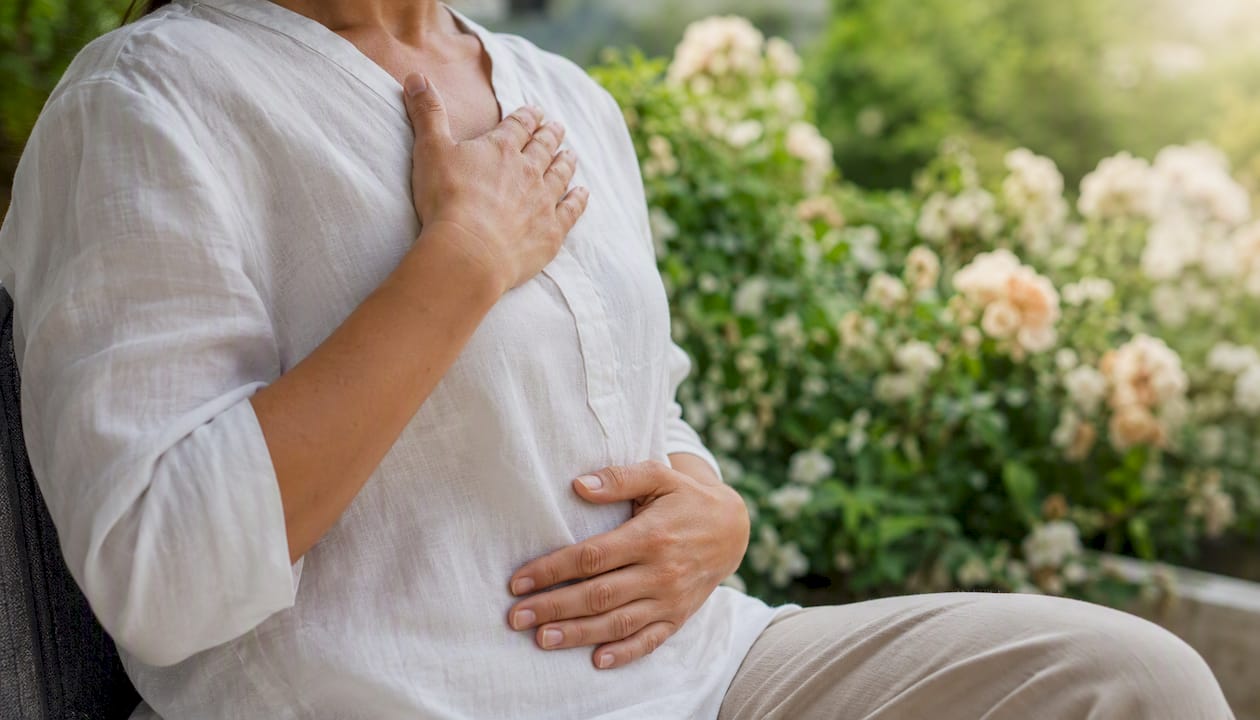
Why it helps: Belly breathing engages the diaphragm and triggers the parasympathetic response directly. The hand placement tells you immediately whether you are breathing correctly.
Best for: Daily baseline practice, beginners, anyone returning from a high-stress meeting.
2. 4-7-8 breathing
Script: Inhale through your nose for 4 counts. Hold for 7 counts. Exhale through your mouth for 8 counts. Repeat 4 cycles.
Why it helps: The extended hold and long exhale amplify vagal activation. Many people find it noticeably sedating after two or three cycles.
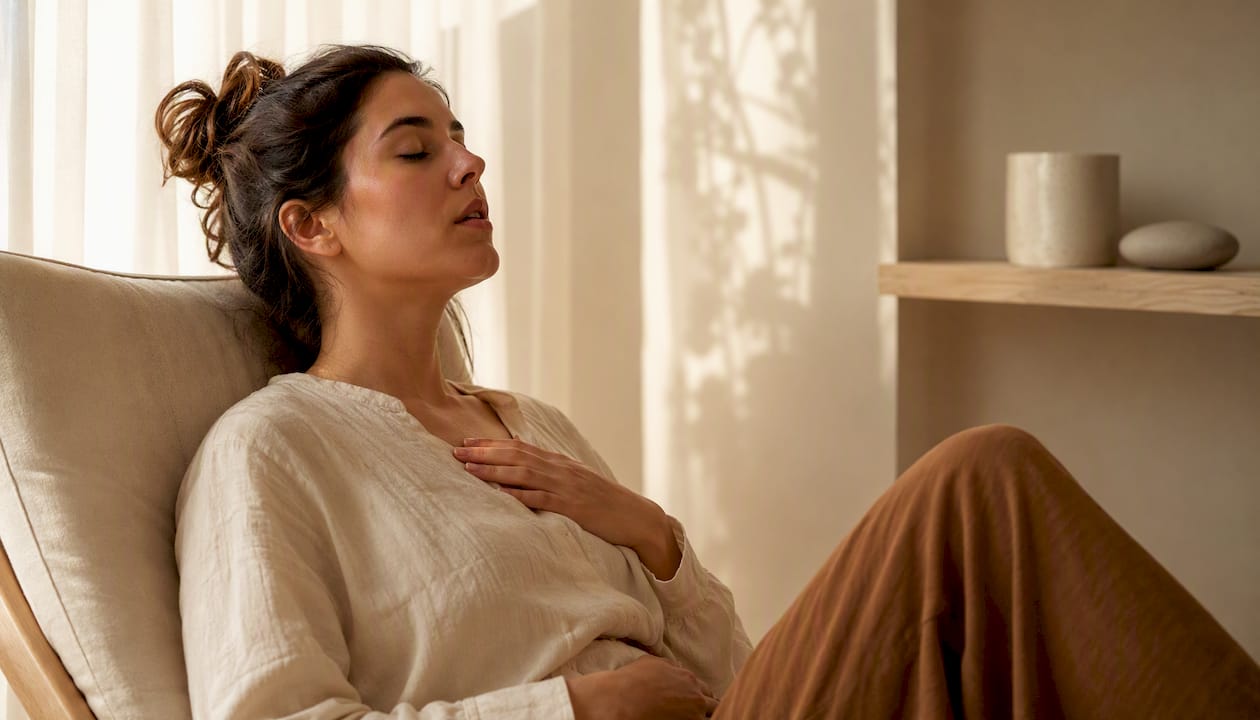
Best for: Pre-sleep tension, acute anxiety spikes, moments when your mind is racing.
Caution: The 7-count hold can cause light-headedness in beginners. Shorten the hold to 4 counts until you are comfortable.
3. Box breathing
Script: Inhale for 4 counts. Hold for 4. Exhale for 4. Hold for 4. Repeat 4–6 cycles.
Why it helps: The equal-ratio pattern steadies attention and regulates the nervous system simultaneously. It is used in high-pressure environments precisely because it works under stress.
Best for: Before a presentation, during a difficult conversation, or any moment requiring sharp focus alongside calm.
4. Cyclic sighing
Script: Take a normal inhale through your nose, then add a short second sniff at the top to fully inflate the lungs. Exhale slowly and completely through your mouth. Repeat for 5 minutes.
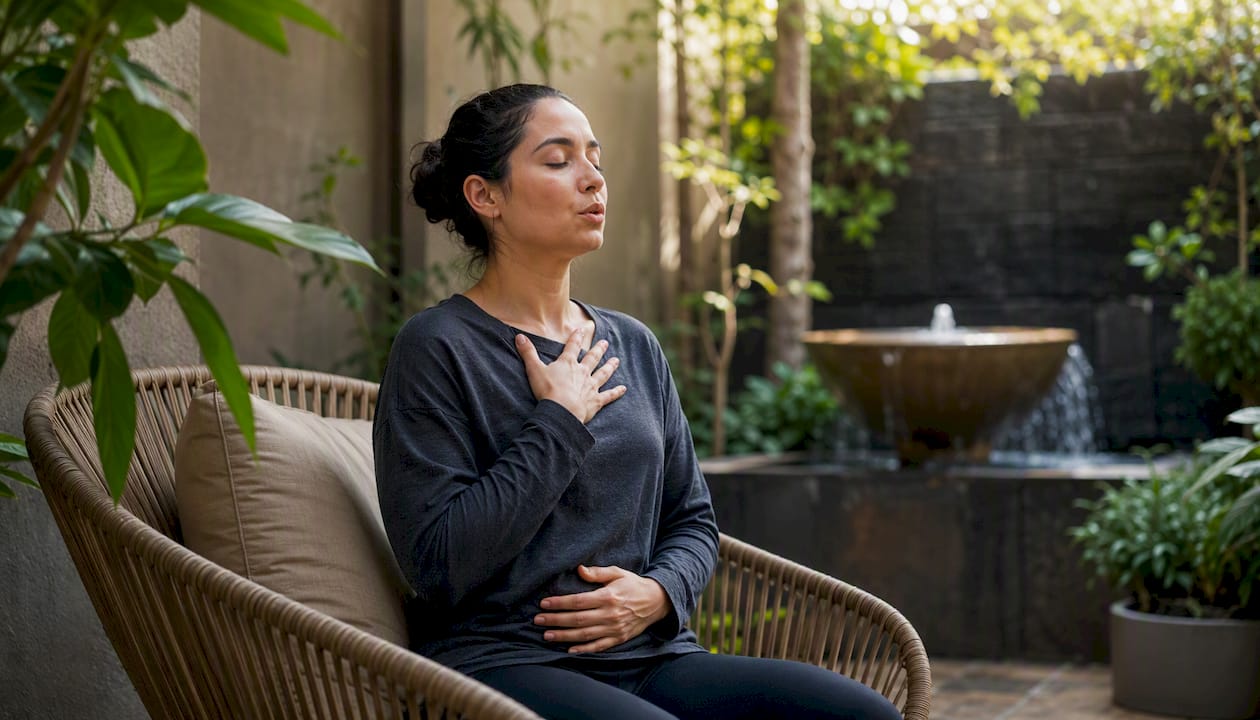
Why it helps: BBC Future coverage of recent trials highlights cyclic sighing as one of the most effective short daily practices for mood and anxiety improvement. The double inhale deflates air sacs that collapse under stress.
Best for: Midday reset, post-commute decompression, mood dips.
5. Coherent breathing (5:5 pattern)
Script: Inhale through your nose for 5 counts. Exhale through your nose for 5 counts. Aim for roughly 5–6 breath cycles per minute. Continue for 5–10 minutes.
Why it helps: This pace maximizes HRV and creates a steady, almost meditative rhythm. It is gentle enough for daily use and requires no breath-holding.
Best for: Sustained relaxation, managing chronic low-grade stress, pairing with a body treatment or massage.
6. Humming bee breath (Bhramari)
Script: Sit quietly. Close your eyes. Inhale through your nose. On the exhale, close your lips and hum gently, feeling the vibration in your skull. Repeat 5–7 times.
Why it helps: The humming creates internal vibration that calms the nervous system and is particularly effective for releasing jaw and facial tension.
Best for: End-of-day wind-down, tension headaches, moments of frustration.
Caution: Avoid in public spaces unless you have a private moment. Not recommended during pregnancy without guidance from a healthcare provider.
7. Mindful breathing anchor practice
Script: Sit comfortably. Close your eyes. Notice the natural breath without changing it. Pick one anchor: the rise of your belly, the sensation at your nostrils, or the pause between breaths. When your mind wanders, simply return to the anchor. Practice for 5–7 minutes.
Why it helps: Psychology.com's guided script frames this well: even three slow, conscious breaths create space to respond rather than react. The anchor trains the noticing-and-returning skill that makes all other techniques more effective.
Best for: Building a daily habit, reducing background anxiety, preparing for sleep.
Use-case matrix:
How to practice mindful breathing effectively
Pick a single anchor and return to it every time your attention wanders. That returning is the practice, not a sign you are doing it wrong. Mindful: distraction is the moment the practice is working, not a failure.
Posture options:
- Seated in a chair: Feet flat on the floor, spine tall but not rigid, hands resting on your thighs or belly.
- Standing: Feet hip-width apart, knees soft, shoulders relaxed. Useful at your desk or on the MRT.
- Lying down: Flat on your back, arms slightly away from your sides. Best for pre-sleep practice, though easier to fall asleep.
Hand placement: One hand on your belly, one on your chest. Your belly hand should rise on the inhale; your chest hand should stay relatively still. This single cue, drawn from CHOP's diaphragmatic breathing guidance, tells you instantly whether you are breathing from the diaphragm.
Handling distractions:
- Label the thought briefly ("planning," "worrying") and return to your anchor without judgment.
- Use a tactile anchor, such as pressing your fingertips together lightly, to pull attention back when mental noise is high.
- At work, three discreet nasal breaths with a slow exhale take under 20 seconds and are invisible to colleagues.
Pro Tip: Beginners often try to force deep breaths, which can feel unnatural and even anxious. Start by simply noticing your natural breath for the first minute, then gently lengthen the exhale if it feels comfortable. Observation first, adjustment second.
Pro Tip: Use a gentle timer app (Insight Timer is free and widely used in Singapore) for your first two weeks. Knowing the timer will signal the end removes the urge to check the clock, which is one of the most common reasons beginners give up early.
Building a daily breathwork habit: a 4-week starter plan
Short, consistent daily practice outperforms occasional long sessions for long-term stress regulation. The NHS recommends a few minutes daily as the minimal effective dose for measurable benefit. Here is a simple progression:
- Week 1 (micro-doses): Three conscious belly breaths at three fixed moments each day: after brushing your teeth in the morning, before your first meeting, and before sleep. Total time: under 2 minutes.
- Week 2 (short sessions): Add one 5-minute diaphragmatic or mindful anchor session after your morning micro-dose. Stack it onto an existing habit, such as after your morning coffee.
- Week 3 (technique variety): Replace one 5-minute session with a technique from the list above that matches your biggest stress trigger. Try box breathing before high-pressure meetings or cyclic sighing on your MRT commute home.
- Week 4 (consolidation): Aim for 10 minutes total daily, split however suits your schedule. Two 5-minute sessions work as well as one 10-minute block.
Progress is subtle at first. Most people notice better sleep quality and a slightly longer fuse under pressure before they notice reduced stress scores. Expect the first real shift around days 10–14 of consistent practice.
Safety notes and when to stop or seek help
Stop immediately if you feel faint, experience chest pain, or notice tingling in your hands and face. These are signs of hyperventilation, which happens when you breathe too fast or too deeply for too long. The fix is simple: slow down, breathe through your nose only, and let the breath return to its natural pace.
Do not attempt breath-holding techniques (4-7-8, box breathing) if you have:
- Chronic obstructive pulmonary disease (COPD) or asthma without first consulting your doctor.
- A history of panic disorder, where breath focus can sometimes trigger anxiety rather than relieve it.
- Cardiovascular conditions, until cleared by a healthcare provider.
- Pregnancy, particularly for techniques involving extended breath-holds or forceful exhalations.
Safe modifications for sensitive practitioners:
- Shorten all counts by half (inhale 2, exhale 4 instead of 4 and 8).
- Use nose-only breathing throughout, which naturally limits breath volume.
- Sit rather than lie down if you feel dizzy.
- The NHS Inform controlled breathing guide recommends a gentle 3-3-3-3 pattern as a safe starting point for anyone prone to light-headedness.
When to seek professional help: Stop your practice and consult a doctor or healthcare provider if you experience persistent dizziness lasting more than a few minutes after stopping, chest tightness or pain, severe shortness of breath unrelated to exercise, or a significant worsening of anxiety symptoms. For mental health support in Singapore, MindSG from MOH provides accessible public-health resources and guided breathing videos. The Houseofwellnesssg team can also advise on whether an in-clinic relaxation session is appropriate for your situation.
What the research actually shows
Systematic reviews and RCT meta-analyses consistently show small-to-moderate improvements in self-reported stress after breathwork interventions. That framing matters: breathwork is not a cure for clinical anxiety or depression. It is a reliable, low-cost tool that reduces subjective stress and supports other treatments.
The headline figure from the 2023 Scientific Reports meta-analysis is a Hedges' g of −0.35 for stress reduction across 12 RCTs and 785 participants. In practical terms, an effect size in this range is comparable to the benefit of regular moderate exercise on mood. For a practice that takes five minutes and requires no equipment, that is a strong return.
What the evidence supports:
- Immediate, subjective stress relief after a single session of slow breathing.
- Mood and anxiety improvements over several weeks with daily practice, particularly with cyclic sighing and coherent breathing patterns, per BBC Future's coverage of recent trials.
- Physiological markers (lower heart rate, improved HRV) that improve with consistent practice.
What it does not support:
- Breathwork as a standalone replacement for therapy or medication in clinical anxiety or depression.
- Single sessions producing lasting structural change without ongoing practice.
For Singapore readers managing workplace stress, breathwork fits well as a daily self-care tool alongside professional support when needed. Local providers like Art of Living Singapore and Soltherapy offer structured breathwork programs for those who want guided group or one-on-one sessions beyond self-practice.
Fitting mindful breathing into a Singapore wellness routine
A morning micro-practice, midday micro-doses, and a pre-sleep five minutes: that is the whole routine, and it fits inside a full Singapore workday without rearranging anything.
The morning three breaths after brushing your teeth take less time than waiting for the kettle. The midday reset, three slow nasal breaths before you open your laptop after lunch, is invisible to anyone around you. The pre-sleep five minutes of coherent breathing or the mindful anchor practice is the one moment you give yourself before the day ends.
What makes this sustainable in Singapore's pace is the stacking approach. You are not carving out new time. You are inserting breath awareness into transitions you already make: the lift ride up to the office, the pause before a client call, the MRT journey home. Each of those moments is a ready-made anchor point.
For days when self-practice feels thin or you want to go deeper, an in-clinic session at Houseofwellnesssg pairs breath-aware relaxation with hands-on treatment in a way that is genuinely different from practicing alone. The environment does a lot of the work.
Houseofwellnesssg: in-person relaxation sessions in Singapore
Breathwork practiced alone is powerful. Practiced inside a calm, professionally designed treatment environment, it tends to go deeper faster.
Houseofwellnesssg, located in Tanjong Pagar, offers wellness sessions that pair a calming treatment environment with hands-on therapies designed to release physical tension from the first minute. For busy professionals who find it hard to switch off at home, the clinic setting removes the distractions that make self-practice difficult. The 90-minute Ideal Balance of Skinwork and Relaxation session is a natural fit: it combines advanced skin treatments with a structured relaxation arc that lets your nervous system fully unwind. Treatments like lymphatic drainage and body wellness rituals complement breathwork by addressing physical tension that breath alone cannot always reach. No sales pressure, no rigid scripts. Book a session at Houseofwellnesssg and arrive ready to breathe.
Sources
- Effect of breathwork on stress and mental health: A meta-analysis of randomised-controlled trials | Scientific Reports
- Breathing exercises for stress - NHS
- Diaphragmatic breathing — Cleveland Clinic
- These breathing techniques could reduce your stress in minutes — BBC Future
This article is general information, not a substitute for advice from a qualified doctor. Consult a qualified healthcare professional about your own circumstances before acting on anything here.