

Neck and shoulder tension is muscle tightness and guarding in the cervical and upper trapezius region that usually responds well to self-care, but occasionally signals nerve involvement or a systemic condition that needs prompt attention. The fastest actions you can take right now: stand up, roll your shoulders back gently, reset your chin over your chest, and apply a warm compress to the stiff area for 15–20 minutes. If pain radiates down your arm, or you feel numbness or tingling in your fingers, stop and seek medical review.
Start here — what to do in the next 10 minutes:
- Stand and do three slow shoulder rolls backward.
- Gently tilt your ear toward your shoulder (left, then right), holding 20–30 seconds per side.
- Tuck your chin slightly and draw your shoulder blades together for 5 seconds. Repeat five times.
- Apply a warm heat pack to the upper back and neck for several minutes.
- If you have been sitting for more than an hour, take a short walk, even just around the room.
Statistic to know: The average human head weighs about 10 pounds. When you lean forward even slightly during screen use, the effective load on your cervical spine multiplies, which is why a few hours at a desk can leave your neck feeling like it has carried something far heavier.
Pro Tip: Set a phone alarm for every 45 minutes during your workday. When it goes off, stand, reset your posture, and do three slow neck tilts. That single habit addresses the root cause more reliably than any single stretch session.
Key Takeaways
Neck and shoulder tension almost always responds to consistent self-care, but knowing when to escalate to a clinician in Singapore is what separates a quick recovery from a chronic problem.
| Point | Details |
|---|---|
| Act immediately | Gentle stretches, a posture reset, and 15–20 minutes of heat address most acute flare-ups. |
| Know the red flags | Radiating arm pain, numbness, weakness, or fever require prompt medical review, not more stretching. |
| Build a daily routine | A 10-minute mobility and strengthening routine, done consistently, reduces recurrence more than occasional intense sessions. |
| Escalate with a timeline | See a GP after 2–3 weeks of no improvement; expect 4–8 physiotherapy sessions for most mechanical cases. |
| Houseofwellnesssg | Customizable body treatments including lymphatic drainage and back treatments complement medical care for ongoing tension relief in Singapore. |
This article is general information, not a substitute for advice from a qualified doctor. Consult a qualified healthcare professional about your own circumstances before acting on anything here.
Table of Contents
- What causes neck and shoulder tension?
- What symptoms signal a red flag?
- Practical self-care you can use today
- A clinician-reviewed 10-minute daily routine
- What professional treatment options exist in Singapore?
- How to prevent neck and shoulder tension long-term
- How long does recovery usually take?
- The part most people skip: maintenance
- Houseofwellnesssg can support your tension relief
- Sources
What causes neck and shoulder tension?
The most common driver is mechanical: your posture during daily tasks. Forward head posture, where your chin juts ahead of your shoulders, places sustained load on the muscles and ligaments of the cervical spine. Rounded shoulders compound this by shortening the chest muscles and overstretching the upper back. Both patterns are almost universal among desk workers, drivers, and anyone who spends long hours on a phone.

Overuse and repetitive tasks add a second layer. Carrying a bag on one shoulder, sleeping in an awkward position, or performing the same arm movement repeatedly at work can create micro-fatigue in the trapezius, levator scapulae, and rhomboid muscles. Sleep posture matters more than most people realize: a pillow that is too high or too flat keeps the neck in a sustained stretch for hours.
Emotional stress is a less visible but equally real contributor. Stress and anxiety commonly cause the neck and shoulder muscles to guard, a low-level contraction that persists even when you are not consciously aware of it. Chronic sympathetic arousal, the body's "alert" state, keeps these muscles slightly contracted around the clock. Over days and weeks, that low-level tension accumulates into the familiar ache at the base of the skull and across the tops of the shoulders.
Structural causes are less common but worth knowing. Degenerative disc disease and cervical radiculopathy (nerve root compression) can produce symptoms that feel like muscle tension but do not resolve with stretching. Musculoskeletal conditions are a leading cause of disability globally, and the WHO emphasizes mobility and self-management as core prevention strategies, which underscores why addressing posture and movement early matters.
Common risk factors at a glance:
- Prolonged desk or laptop use without postural breaks
- Frequent phone use with the head tilted downward
- High-stress work or life circumstances
- Poor sleep setup (pillow height, sleep position)
- Driving long distances regularly
- Sedentary lifestyle with little upper-back strengthening
What symptoms signal a red flag?
Routine neck and shoulder tension feels like stiffness, a dull ache, restricted range of motion, or tender "knots" in the upper trapezius. You may notice tension headaches that start at the base of the skull and spread forward, or a pulling sensation across the upper back that worsens after sitting. These symptoms are uncomfortable, but they are not urgent.
Certain symptoms change the picture entirely. Red flags that require urgent medical review include severe radiating pain into the arm, numbness or weakness in the hands or arms, fever, or persistent pain that does not improve after weeks of self-care. A sudden severe headache that feels unlike any you have had before also warrants same-day assessment.
Screenshot this checklist — seek care promptly if you have any of:
- Pain that radiates from the neck into one or both arms
- Numbness, tingling, or burning in the hands or fingers
- Weakness when gripping or lifting
- Fever alongside neck stiffness
- A sudden, severe headache described as "the worst of your life"
- Unexplained weight loss with persistent neck pain
- Symptoms that worsen steadily over weeks despite self-care
What to tell your clinician: when the pain started, what makes it better or worse, whether you have any neurological symptoms (tingling, weakness), any prior neck injuries, and what self-care you have already tried. That information helps your GP or physiotherapist triage quickly and order imaging only when it is genuinely needed.
Pro Tip: Take a photo of the checklist above before your appointment. Clinicians in Singapore's public and private systems appreciate concise symptom histories, and having your timeline written down saves time during a short consultation.
Practical self-care you can use today
Stretches that actually help
Start with a lateral neck tilt: sitting tall, slowly lower your right ear toward your right shoulder until you feel a gentle pull on the left side of your neck. Hold for 20–30 seconds, then switch sides. Keep your shoulders relaxed and down throughout.

Next, try a chin tuck: sit or stand with your back straight, then gently draw your chin straight back (not down) as if making a double chin. Hold for 5 seconds and release. Ten repetitions of this move retrains the deep neck flexors and counteracts forward head posture.
For the upper trapezius, a shoulder cross-body stretch works well: reach your right arm across your chest, use your left hand to gently press it closer to your body, and hold for 20 seconds. Repeat on the other side.
Heat vs. cold: choosing the right one
Heat is the better choice for chronic tightness and muscle tension that has been present for more than 48–72 hours. A warm compress, heat pack, or warm shower relaxes the muscle fibers and increases local circulation. Cold is more appropriate in the first 24–48 hours after an acute strain or injury, when inflammation is the primary issue. For most desk-related tension, heat wins.
Self-massage at home
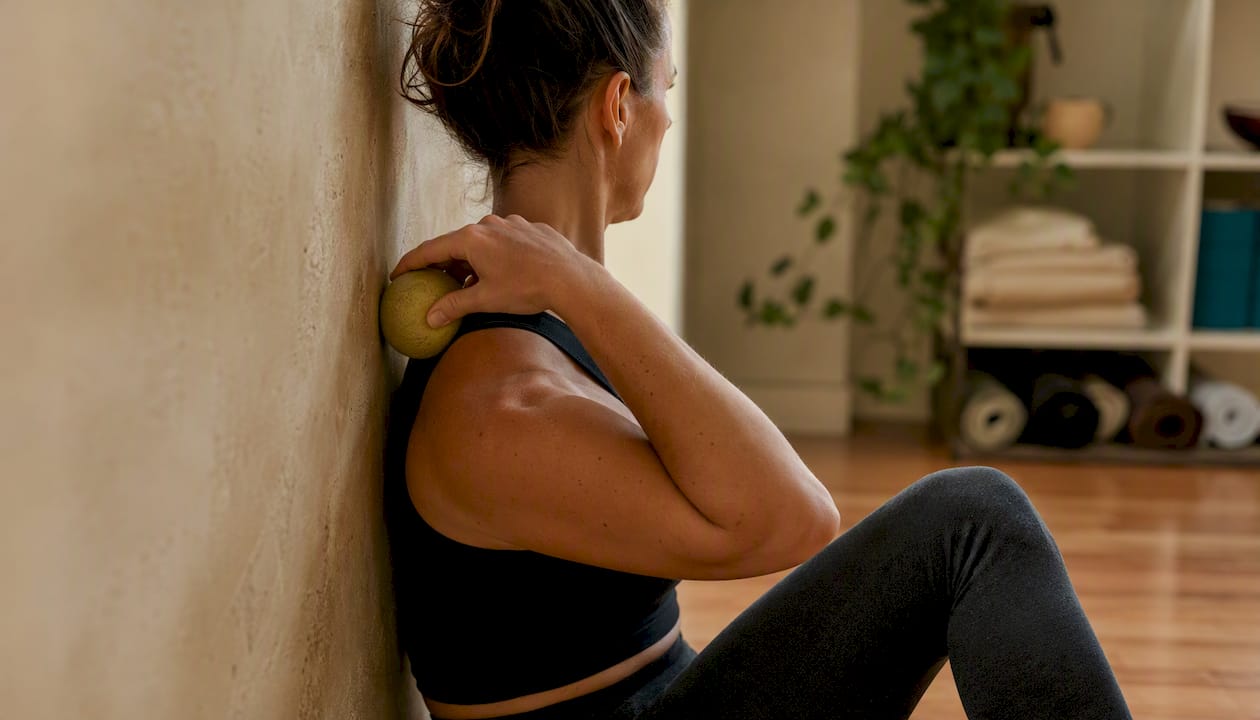
Apply gentle kneading pressure to the upper trapezius (the ridge between your neck and shoulder) using your opposite hand. Work in small circular motions for 30–60 seconds per side. You can also use a tennis ball against a wall to apply sustained pressure to tight spots in the upper back. Avoid aggressive pressure if you have any radiating symptoms or nerve-related pain.
Workstation fixes
Raise your monitor so the top of the screen sits at or just below eye level. Position your keyboard so your elbows rest at roughly 90 degrees. If you use a laptop, a separate keyboard and a laptop stand make a significant difference. Keep your phone at eye level when reading rather than tilting your head down.
Sleep and OTC options
A medium-firm pillow that keeps your neck in a neutral position (aligned with your spine) reduces morning stiffness. Side sleepers often benefit from a slightly thicker pillow than back sleepers. Over-the-counter options like ibuprofen or paracetamol can reduce acute discomfort when used as directed, but they address symptoms rather than the underlying cause.
Pro Tip: Stop any stretch or self-massage immediately if you feel tingling, burning, or a sharp increase in pain. These sensations suggest nerve involvement, and continuing can worsen the problem. Book a GP or physiotherapy appointment instead.
A clinician-reviewed 10-minute daily routine
Short, structured mobility sequences can relieve neck and shoulder tightness and train movement patterns that prevent recurrence. This routine is designed for desk workers and can be done at your workstation or at home. For seated workers, targeted neck mobility exercises like these are among the most practical tools available.
The 10-minute routine:
- Warm-up (2 minutes): Slow shoulder rolls (10 forward, 10 backward), gentle head nods (chin to chest and back), and three deep diaphragmatic breaths to reduce sympathetic arousal before moving.
- Mobility (3 minutes): Lateral neck tilts (30 seconds each side), chin tucks (10 reps), and upper trapezius stretches (20 seconds each side).
- Targeted strengthening (3 minutes):
- Scapular retractions: Sit tall, squeeze your shoulder blades together as if holding a pencil between them. Hold 5 seconds, release. Do 10 reps.
- Deep neck flexor activation: Perform a chin tuck, then nod your head slightly downward while keeping the tuck. Hold 5 seconds. Do 8 reps.
- Lower-trapezius hold: Stand near a wall, raise both arms to a "Y" shape at roughly 45 degrees above shoulder height, thumbs pointing back. Hold 5 seconds. Do 8 reps.
- Cooldown (2 minutes): Seated forward fold with arms hanging loose, slow breathing, and a final round of shoulder rolls.
Contraindications: Skip or modify this routine if you have acute nerve symptoms (tingling, arm weakness), severe pain that worsens with movement, or a recent neck injury. In those cases, see a physiotherapist before starting any exercise program.
Pro Tip: Split the routine across your workday if 10 consecutive minutes feel hard to find. Do the warm-up and mobility work at your morning break, and the strengthening moves after lunch. Consistency over a few weeks matters more than duration.
What professional treatment options exist in Singapore?
Starting with a GP
Your GP is the right first stop for neck and shoulder tension that has not responded to two to three weeks of self-care, or sooner if any red flags are present. A GP will take a history, assess your range of motion and neurological function, and decide whether imaging or a referral is warranted. Singapore specialist resources outline diagnostic pathways including history, examination, and imaging when warranted, followed by conservative care or specialist referral. HealthHub (HealthHub.sg) provides accessible guidance on when to visit a GP versus an emergency department for neck pain.
Conservative care options
Physiotherapy is the most evidence-supported first-line treatment for mechanical neck and shoulder tension. A physiotherapist will assess your movement patterns, identify postural contributors, and build a home exercise plan. Physical therapy aims to restore functional movement and correct postural habits, not just provide temporary relief. Therapeutic massage, when combined with targeted exercises and posture changes, can reduce muscle guarding and improve range of motion. Acupuncture is another option some people find helpful for chronic tension.
When imaging or specialist referral is needed
X-rays are typically ordered when there is a history of trauma or concern about bony changes. MRI becomes relevant when nerve involvement is suspected (radiating pain, weakness, persistent numbness). Specialist referral to an orthopedic surgeon or neurosurgeon, including resources like Singapore Spine Centres, is considered when conservative care over six to twelve weeks has not produced improvement, or when imaging reveals significant structural pathology. The Singapore Sports and Orthopaedic Clinic is one local option for musculoskeletal assessment.
Practical timing guidance:
- Try self-care for 1–2 weeks for mild tension.
- See a GP if no improvement after 2–3 weeks, or sooner with red flags.
- Expect a physiotherapy course of 4–8 sessions for most mechanical cases.
- Reassess with your clinician if symptoms persist beyond 12 weeks.
How to prevent neck and shoulder tension long-term
Prevention comes down to consistent small habits rather than occasional big fixes. The WHO's public-health guidance on musculoskeletal conditions places mobility and self-management at the center of prevention, and that translates directly into daily micro-habits.
Daily habits worth building:
- Take a movement break every 45–60 minutes during desk work.
- Do three chin tucks and three shoulder rolls every time you stand up.
- Keep your phone at eye level when reading messages.
- Check your posture each time you sit down: feet flat, back supported, screen at eye level.
Weekly loading: Two to three sessions of upper-back and neck strengthening per week, using moves like the scapular retractions and lower-trapezius holds from the routine above, correct the postural drift that accumulates from daily desk work.
Sleep protocol: Use a pillow that keeps your neck aligned with your spine. Avoid sleeping on your stomach, which rotates the neck for hours at a time. A rolled towel inside your pillowcase can add support for side sleepers.
Stress management: Relaxation techniques, breathing exercises, and short walks reduce anxiety-driven muscle guarding in the neck and shoulders. Even five minutes of slow diaphragmatic breathing before bed lowers sympathetic arousal and helps muscles release overnight.
Pro Tip: Track your posture breaks on a simple habit app or a paper tally. Seeing a streak of consistent days is a stronger motivator than any single stretch session, and it makes the habit stick.
How long does recovery usually take?
Most cases of muscle-tension-driven neck and shoulder discomfort improve within days to a few weeks with consistent self-care. The timeline depends heavily on how long the pattern has been present and whether the underlying drivers (posture, stress, sleep) are being addressed.
Factors that slow recovery:
- Continuing the same postural habits that caused the tension.
- Poor or disrupted sleep, which limits overnight tissue recovery.
- Unresolved chronic stress keeping muscles in a guarded state.
- Underlying structural changes (degenerative disc disease) that require additional management.
| Phase | Typical Duration | Suggested Next Step |
|---|---|---|
| Acute flare | Days to 2 weeks | Self-care: heat, gentle stretches, posture reset |
| Subacute | 2 weeks | Add daily strengthening routine; see GP if no progress |
| Chronic (persistent) | 3+ months | Physiotherapy assessment; consider imaging if red flags present |
If your symptoms have not improved after the expected timeframe for your phase, or if new red flags appear at any point, reassess with a clinician rather than continuing the same approach.
The part most people skip: maintenance
The most common mistake with neck and shoulder tension is treating it as an event rather than a pattern. People feel relief after a good stretch session or a massage and assume the problem is solved. A week later, the same ache returns, and the cycle repeats.
What actually produces lasting change is addressing the daily inputs: the hours of forward head posture, the unbroken sitting, the unprocessed stress that keeps muscles contracted. A single treatment, whether that is a physiotherapy session or a therapeutic massage, provides a window of relief. What you do inside that window, the posture resets, the strengthening work, the breathing practice, determines whether the relief lasts a week or a year.
There is also a tendency to underestimate stress as a physical driver. Muscle guarding from chronic anxiety is not imaginary or secondary. It is a real, measurable contraction that responds to real interventions: movement, breath, and rest. Building those into your week is not a luxury. For many people in Singapore's demanding work culture, it is the most direct path to keeping the neck and shoulders comfortable.
Houseofwellnesssg can support your tension relief
When self-care and medical treatment have addressed the acute phase, a professional wellness session can help you maintain that relief and restore a deeper sense of ease. Houseofwellnesssg, located in Tanjong Pagar, Singapore, offers customizable body treatments designed to complement, not replace, your GP or physiotherapy care.

The lymphatic drainage massage reduces fluid retention and calms the nervous system, making it particularly useful after a period of sustained muscle guarding. The back facial and upper-body treatment targets the shoulder and upper-back muscles directly, combining therapeutic touch with premium skincare products. For those interested in adjunctive modalities, red light therapy supports tissue recovery and relaxation in a non-invasive format. Sessions are consultative and pressure-free, with each treatment customized to your comfort and your current needs. Book your session at Houseofwellnesssg and experience what consistent, professional care feels like.
Sources
- Neck Pain
- How to soothe a sore neck - Harvard Health
- Musculoskeletal conditions (WHO)
- 10-Minute yoga for neck and shoulders - Yoga Journal
- Tension in neck and shoulders from anxiety - Healthline
- Neck Pain - Dr. Prem Pillay, Singapore