

A non surgical face lift uses non-invasive or minimally invasive treatments to refresh and lift your facial appearance without incisions, general anesthesia, or weeks of recovery. In Singapore, the most established options include ultrasound-based treatments like Ultherapy, radiofrequency (RF) devices, PDO thread lifts, and hyaluronic acid (HA) dermal fillers such as Restylane and Juvéderm. All of these are available through licensed medical doctors, and many devices are regulated by Singapore's Health Sciences Authority (HSA). Results are real but gradual, and they require maintenance to sustain.
Here is what you can realistically expect:
- Lifting and tightening from energy devices (ultrasound, RF) appear over 3–6 months as new collagen forms
- Volume restoration from HA fillers is visible almost immediately
- Thread lifts give a mechanical lift that is noticeable within days, with collagen support building over weeks
- Costs in Singapore range from roughly SGD 300 for a single filler syringe to SGD 3,000 or more for a full Ultherapy session
- No treatment is permanent — maintenance sessions are part of every plan
Pro Tip: Before booking any device-based treatment, confirm that the clinic uses an HSA-regulated device and that a licensed medical doctor oversees your care. This single check protects both your safety and your results.
Table of Contents
- What is a non surgical face lift and how does it differ from surgery?
- Who actually benefits from face lifting without surgery?
- Common non-surgical facelift treatments available in Singapore
- What results can you expect and when will you see them?
- How much does a non surgical face lift cost in Singapore?
- Side effects, risks, and how to stay safe in Singapore
- How to choose a clinic and what to ask at your consultation
- What Houseofwellnesssg offers for non-surgical lifting
- Key Takeaways
- When non-surgical care is enough — and when it is not
- Ready to try a non-surgical lift at Houseofwellnesssg in Singapore?
- Useful sources and further reading
What is a non surgical face lift and how does it differ from surgery?
The term "non surgical face lift" covers a broad family of procedures. Clinically, they fall into two categories: truly non-invasive (no needles, no skin penetration) and minimally invasive (needles or micro-channels, but no surgical incisions). You will also hear the phrase "liquid facelift," which usually means a combination of HA fillers and neuromodulators (such as Botox) used to restore volume and relax lines. A PDO thread lift sits in the minimally invasive category: fine dissolvable threads are inserted under the skin to create a mechanical lift and stimulate collagen.
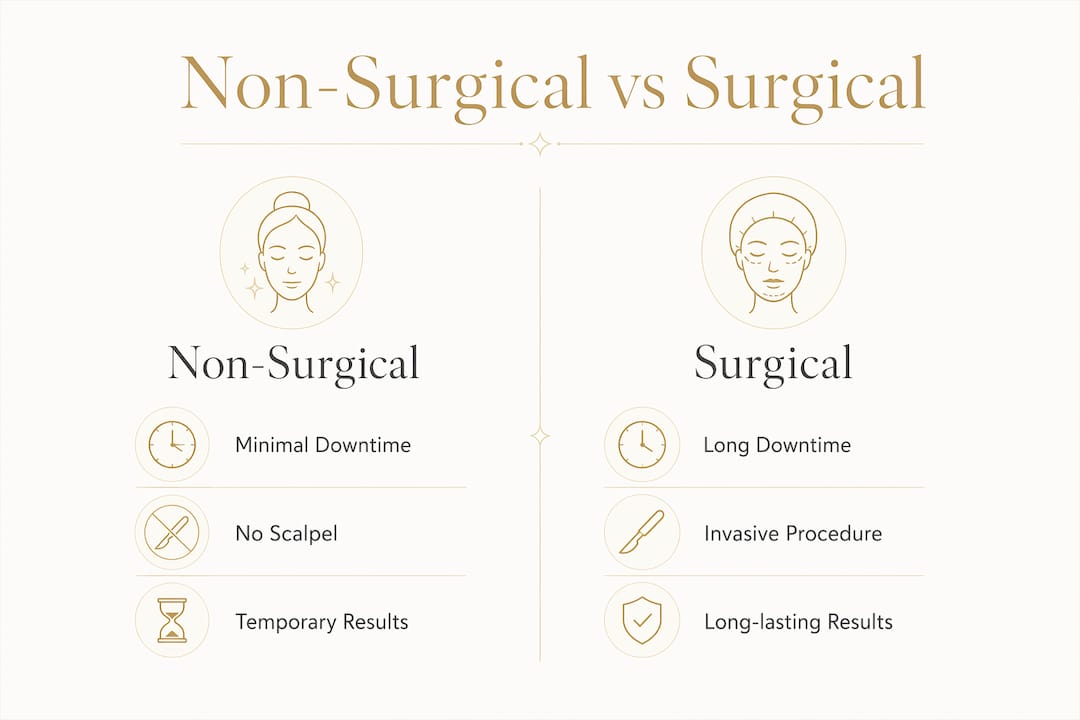
The key difference from a surgical facelift is not just the absence of a scalpel. A surgical facelift physically repositions the underlying muscle and tissue, removes excess skin, and can produce results that last a decade or more. Non-surgical options are less expensive and require far less recovery time, but they are temporary and need ongoing maintenance to hold their effect. Think of surgery as a structural renovation and non-surgical treatments as regular upkeep that keeps the building looking its best.
| Feature | Non-surgical | Surgical facelift |
|---|---|---|
| Downtime | Hours to a few days | 2–4 weeks |
| Anesthesia | Topical or local | General or sedation |
| Results duration | 6 months to 2 years | 7–10 years |
| Typical cost (Singapore) | SGD 300–SGD 3,000 | — |
| Permanence | Temporary; needs maintenance | Long-lasting structural change |
Pro Tip: If you are under 45 with mild to moderate laxity, non-surgical options are usually the right starting point. If you are seeing significant skin excess or deep jowling, a consultation with a plastic surgeon alongside your aesthetic doctor gives you the full picture before committing to either path.
Who actually benefits from face lifting without surgery?
Non-surgical approaches work best when the degree of laxity is mild to moderate. The treatments stimulate your body's own regenerative processes, collagen and elastin production, rather than mechanically repositioning tissue. That distinction matters: you are working with what your skin can still produce, not replacing what surgery would remove.
Good candidates typically have:
- Mild to moderate skin laxity on the cheeks, jawline, or neck
- Early jowling where the jaw definition is softening but skin excess is minimal
- Volume loss in the mid-face, temples, or under-eye area suited to filler correction
- Fine lines and surface texture concerns that respond to collagen stimulation
- Submental (under-chin) fullness they want reduced without liposuction
- A preference for gradual, natural-looking results with minimal downtime
- Interest in prejuvenation — treating earlier to preserve skin structure and delay the need for surgery
Non-surgical treatments are unlikely to deliver satisfying results when:
- Skin laxity is severe, with significant excess skin hanging at the jowls or neck
- The patient expects surgical-level repositioning of deep facial structures
- There is a large amount of submental fat that energy devices cannot adequately address
Red flags that require physician review before any treatment:
- Active skin infections, open wounds, or inflammatory conditions in the treatment area
- History of keloid scarring or abnormal wound healing
- Pregnancy or breastfeeding
- Implanted electrical devices (pacemakers) if RF or ultrasound is being considered
- Recent use of blood thinners or anticoagulants (relevant for thread lifts and injectables)
Common non-surgical facelift treatments available in Singapore
Singapore's aesthetic medicine market offers a wide range of non-invasive and minimally invasive options. Understanding how each one works helps you ask better questions at your consultation.
Ultherapy and ultrasound-based treatments
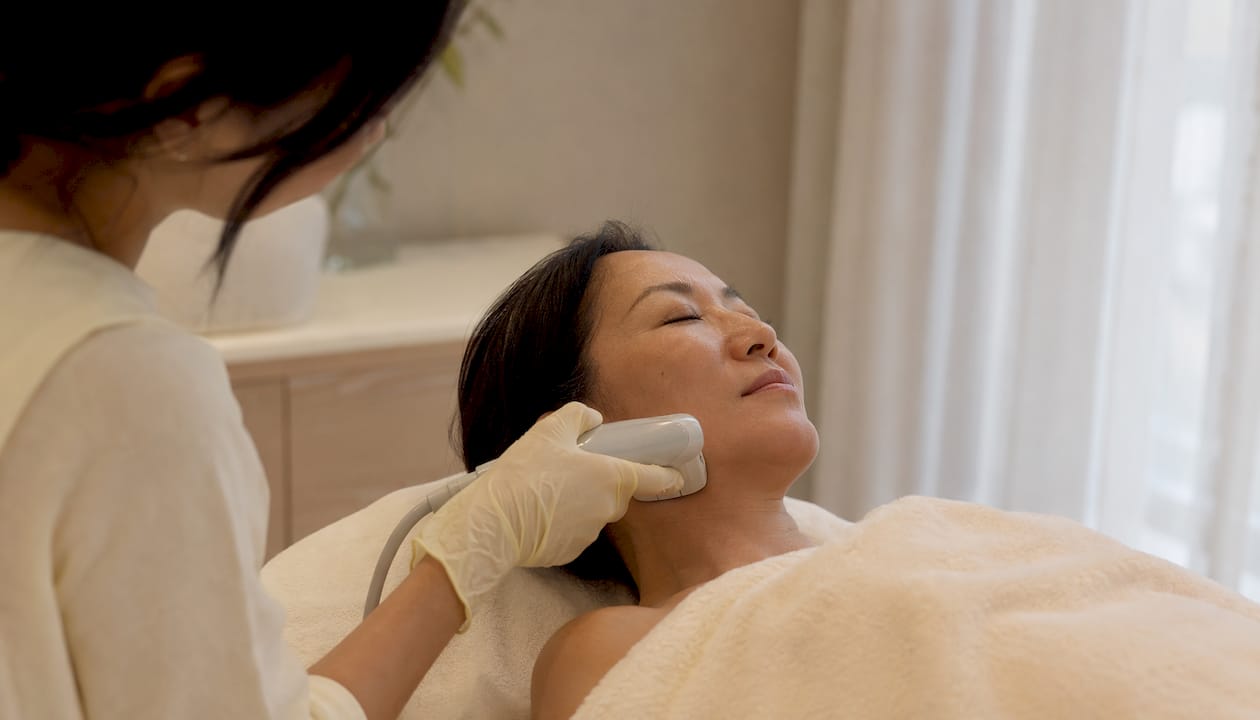
Ultherapy uses focused ultrasound energy to heat tissue at precise depths, typically 1.5 mm, 3 mm, and 4.5 mm below the skin surface. This heat triggers collagen remodeling without touching the skin's surface. It is FDA-cleared for lifting the brow, chin, neck, and chest, and is widely available in Singapore clinics. Sessions take 60–90 minutes; most patients need one session per year with no downtime beyond mild redness.
HIFU (High-Intensity Focused Ultrasound)
HIFU devices work on the same ultrasound principle as Ultherapy but are produced by various manufacturers. Results and safety depend heavily on the device model and the operator's settings. Always ask which specific HIFU device the clinic uses and whether it carries HSA clearance.
Radiofrequency (RF) skin tightening
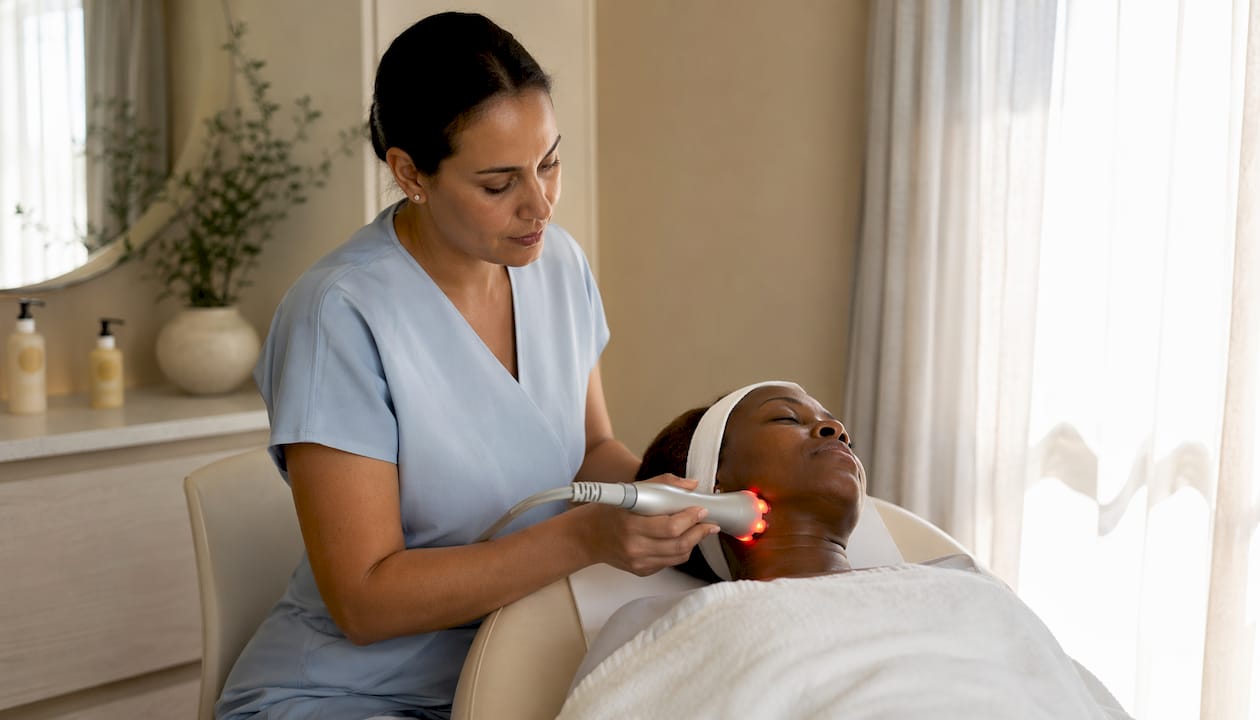
RF treatments heat the dermis and subdermal layers to stimulate collagen and elastin. They are effective for mild laxity, safe across most skin tones, and carry minimal downtime. Houseofwellnesssg's radiofrequency treatments combine RF heat with complementary modalities for both lifting and hydration in a single session.
RF microneedling
RF microneedling delivers radiofrequency energy through fine needles directly into the dermis, placing heat closer to the target tissue than surface RF alone. This minimally invasive approach can produce more noticeable tightening but requires more skill and sometimes topical anesthesia. Downtime is typically 1–3 days of redness and mild swelling.
PDO thread lifts
Polydioxanone (PDO) threads are inserted under the skin using a fine needle. Barbed threads physically lift sagging tissue; smooth threads stimulate collagen along their path. Results are visible within days, with collagen support continuing for several months as the threads dissolve. Downtime is usually 2–5 days of swelling and bruising. Threads typically last 12–18 months before the lift gradually fades.
Hyaluronic acid dermal fillers
HA fillers such as Restylane and Juvéderm restore volume to areas where fat and bone have receded with age. Injected into the mid-face, temples, jawline, or chin, they can rebalance facial proportions and create the appearance of a lift without any energy device. Results are immediate, lasting 9–18 months depending on product and area, and are reversible with hyaluronidase if needed.
Neuromodulators (Botox category)
Botulinum toxin injections relax specific muscles to soften dynamic lines (forehead, crow's feet, frown lines) and can create subtle lifting effects at the brow and jawline when used strategically. Results appear within 5–14 days and last 3–4 months. They are almost always part of a combination plan rather than a standalone lift.
Fractional lasers and microneedling
Fractional lasers (such as CO2 or erbium) resurface the skin and stimulate collagen by creating controlled micro-injuries. Houseofwellnesssg's microneedling service uses a similar collagen-induction principle without laser heat, making it suitable for a wider range of skin tones with less risk of post-inflammatory hyperpigmentation. Downtime for fractional laser is 3–7 days; for microneedling, 24–48 hours.
Submental fat treatments
For a double chin, non-surgical options include RF, ultrasound, or cryolipolysis to reduce submental fat. These treatments work gradually over 2–3 months and are best suited to mild to moderate fat deposits. Significant submental fat may still require a surgical or minimally invasive procedure for meaningful change.
Pro Tip: Combination approaches — pairing HA fillers for volume with an energy device for tightening and a neuromodulator for lines — address the three main drivers of facial aging simultaneously. A single modality rarely delivers the same depth of result.
| Modality | Mechanism | Best for | Downtime | Typical durability |
|---|---|---|---|---|
| Ultherapy / HIFU | Focused ultrasound, collagen remodeling | Brow, jawline, neck laxity | Minimal (hours) | 12–18 months |
| RF (surface) | Dermal heating, collagen stimulation | Mild laxity, skin quality | Minimal | 6–12 months |
| RF microneedling | Intradermal RF via needles | Moderate laxity, texture | 1–3 days | 12–18 months |
| PDO thread lift | Mechanical lift + collagen induction | Jowls, mid-face, neck | 2–5 days | 12–18 months |
| HA dermal fillers | Volume replacement | Volume loss, contour | Minimal | 9–18 months |
| Neuromodulators | Muscle relaxation | Dynamic lines, brow lift | None | 3–4 months |
| Fractional laser | Controlled resurfacing | Texture, fine lines | 3–7 days | 6–12 months |
| Microneedling | Collagen induction | Texture, mild laxity | 24–48 hours | 6–12 months |
What results can you expect and when will you see them?
The timeline for non-surgical results depends on the treatment type. Some changes are visible almost immediately; others unfold quietly over months as your skin rebuilds from within.
- Immediate: HA fillers deliver visible volume and contour the same day. PDO threads show a lift within 24–48 hours once initial swelling settles.
- 2–4 weeks: Neuromodulators reach full effect. Redness and minor swelling from RF microneedling or microneedling resolve.
- 3–6 months: Energy-based treatments (Ultherapy, RF, HIFU) reach their peak collagen-driven results in this window. Plan a follow-up assessment at the 3-month mark to evaluate progress.
- 6–12 months: The full benefit of a PDO thread lift, including the collagen support phase, is typically visible by month 6.
Statistic callout: More than 13 million minimally invasive cosmetic procedures were performed in the U.S. in 2020 alone, reflecting how widely patients have embraced non-surgical options as a practical alternative to surgery.
Maintenance schedules by modality:
- HA fillers: top-up every 9–18 months, depending on area and product
- Neuromodulators: repeat every 3–4 months to maintain effect
- Ultherapy / HIFU: one session per year for most patients
- RF (surface): a series of 3–6 sessions initially, then one maintenance session every 6–12 months
- PDO threads: repeat procedure every 12–18 months
- Microneedling: a series of 3–4 sessions spaced 4 weeks apart, then maintenance every 3–6 months
No non-surgical treatment is permanent. Results are temporary and patient-dependent, which is why a clear maintenance plan from your provider is as important as the initial treatment itself.
How much does a non surgical face lift cost in Singapore?
Costs vary considerably based on the device, the provider's qualifications, the treatment area, and the number of sessions or syringes required. The table below gives typical Singapore price ranges as a planning guide.
| Modality | Typical Singapore price range |
|---|---|
| RF skin tightening (face) | SGD 300–SGD 3,000 per session |
| HA dermal filler (per syringe) | SGD 300 per syringe |
What drives the price up or down:
- Provider qualifications: Treatments performed by a medical doctor with specialized aesthetic training typically cost more than those at a general wellness center, and rightly so. Practitioner skill is the single biggest factor in both safety and outcome.
- Device model: Newer or more clinically validated devices carry higher operating costs, which are reflected in session pricing.
- Treatment area size: A full face and neck Ultherapy session costs significantly more than a targeted chin or brow treatment.
- Number of syringes or threads: Filler and thread costs scale directly with volume used.
- Follow-up sessions: Some modalities require a series to achieve the desired result, so ask for total-course pricing, not just per-session pricing.
Pro Tip: Always request an itemized quote before committing. A reputable clinic will list the device name, the number of shots or syringes, the practitioner's fee, and any aftercare products separately. If a quote is a single lump sum with no breakdown, ask for clarification before you proceed.
Side effects, risks, and how to stay safe in Singapore
Non-surgical does not mean risk-free. Understanding what is normal and what is not helps you recover confidently and know when to call your provider.
Common side effects (expected and temporary):
- Redness and warmth — typical after RF, HIFU, and microneedling; usually resolves within a few hours to 24 hours
- Swelling — most common after thread lifts, fillers, and RF microneedling; peaks at 24–48 hours and settles within 3–5 days
- Bruising — common at filler and thread injection sites; fades within 5–10 days
- Tenderness or numbness — mild and localized after thread lifts or deep RF; resolves within days to a few weeks
- Temporary skin sensitivity — heightened sensitivity to sun and heat after laser or microneedling; use SPF 50 and avoid direct sun for at least 2 weeks
Rare but serious risks to know:
- Vascular occlusion from filler injected near a blood vessel — this is a medical emergency requiring immediate hyaluronidase treatment; choose only an experienced medical doctor for filler injections
- Thread migration or puckering if threads are placed incorrectly
- Burns or scarring from incorrect RF or laser energy settings
- Infection at needle or thread insertion sites
Safety checklist for Singapore patients:
- Confirm your provider is a licensed medical doctor (check the Singapore Medical Council register)
- Ask whether the device is HSA-regulated or carries FDA clearance for the intended indication
- Request to see before-and-after photos from the clinic's own patients, not stock images
- Sign a written informed consent form that lists the specific device, technique, and risks
- Receive a written aftercare plan and an emergency contact number
Practitioner experience and correct energy settings are the most critical variables in both safety and results. Choosing a provider based on price alone is the fastest route to underwhelming outcomes or avoidable complications.
How to choose a clinic and what to ask at your consultation
The consultation is your most important appointment. It is where you assess the provider as much as they assess you.
Selection criteria:
- Medical doctor with documented aesthetic training and experience in the specific modality you are considering
- Clinic that lists its device inventory by brand and model, not just generic category names
- Transparent, itemized pricing available before the appointment
- A clear policy on before-and-after photos and realistic outcome discussions
- No high-pressure sales environment; a good provider will give you time to decide
Questions to bring to your consultation:
- Which specific device will you use, and does it carry HSA or FDA clearance for this indication?
- Who performs the treatment — the doctor or a therapist — and what are their qualifications?
- How many sessions will I realistically need to see a meaningful result?
- What is the total cost for the recommended course, including follow-ups?
- What is your protocol if I experience a complication or am unhappy with the result?
- Can I see before-and-after photos of patients with a similar concern and skin type to mine?
Red flags to walk away from:
- Promises of "permanent" or "surgical-level" results from a non-surgical device
- Inability or unwillingness to name the specific device being used
- Pressure to book and pay on the same day as the consultation
- No written consent form or aftercare documentation
- Credentials that cannot be verified through the Singapore Medical Council or the clinic's own website
What Houseofwellnesssg offers for non-surgical lifting
Houseofwellnesssg takes an integrated approach to facial lifting and skin health, combining multiple modalities in a single, customized session rather than treating each concern in isolation. The clinic's non-surgical lifting protocols draw on radiofrequency heat, microcurrent sculpting, microneedling, cryotherapy, and red light therapy, each chosen for its specific role in lifting, toning, or supporting skin recovery.
What to expect when you visit:
- A thorough skin and wellness consultation before any treatment begins, covering your concerns, medical history, and realistic goals
- A personalized session plan that selects and sequences modalities based on your skin's current condition, not a one-size protocol
- Sessions typically run 60–90 minutes, with time built in for both active treatment and recovery steps
- Realistic outcome guidance: you will be told what each modality can and cannot achieve for your specific concern
- A written aftercare plan, including guidance on sun protection, topical support, and when to return for a follow-up
The clinic uses premium skincare products including Sothys and Dermalogica to support skin health before and after energy treatments. Cryotherapy is used as a calming and contouring adjunct, while red light therapy supports collagen recovery post-session. For readers interested in a pre-treatment preparation guide, reviewing what to do in the days before your appointment can meaningfully improve your results.
To learn more or book a consultation, visit the Houseofwellnesssg services page.
Key Takeaways
Non-surgical facelifts deliver real but temporary results through collagen stimulation, volume restoration, and mechanical lifting — and every plan requires maintenance to sustain the outcome.
| Point | Details |
|---|---|
| Results are gradual for energy devices | Ultrasound and RF treatments reach peak results at 3–6 months, not immediately after the session. |
| Combination plans outperform single modalities | Pairing fillers, energy devices, and neuromodulators addresses volume, laxity, and lines together. |
| Costs vary widely in Singapore | Expect SGD 300–SGD 3,000 per session depending on modality, device, and provider qualifications. |
| Safety starts with provider credentials | Verify your provider is a licensed medical doctor and that the device carries HSA or FDA clearance. |
| Houseofwellnesssg offers integrated sessions | RF, microcurrent, microneedling, and cryotherapy are combined in customized plans at the clinic. |
When non-surgical care is enough — and when it is not
The most honest thing a wellness clinic can tell you is when you have reached the limit of what non-surgical treatment can achieve. The concept of prejuvenation — starting energy treatments and maintenance routines in your 30s and early 40s — is genuinely defensible. Preserving collagen before significant loss occurs is far more effective than trying to rebuild it after the fact. Regular RF, microneedling, and filler maintenance can keep many patients looking refreshed well into their 50s without ever needing surgery.
But there is a threshold. When skin laxity is severe, when jowls are pronounced and skin excess is visible, non-surgical devices are unlikely to match what a surgical facelift can achieve. Continuing to invest in energy treatments at that stage can delay a decision that would ultimately serve the patient better.
Non-surgical is preferable when:
- Laxity is mild to moderate and skin quality is the primary concern
- The patient values minimal downtime and gradual, natural-looking change
- The goal is maintenance and prevention rather than correction of significant structural change
Consider a surgical consultation when:
- Skin excess is visible at the jowls or neck that no energy device can tighten
- Multiple rounds of non-surgical treatment have produced diminishing returns
- The patient's goal is a durable, structural result that lasts a decade
The right answer is not always one or the other. Many patients benefit from non-surgical maintenance before and after a surgical procedure, using energy treatments and fillers to extend and complement surgical results.
Ready to try a non-surgical lift at Houseofwellnesssg in Singapore?
Choosing a non-surgical path means choosing care that works with your skin's natural rhythms rather than against them. Houseofwellnesssg offers customized facial sessions in Singapore that combine radiofrequency heat, microcurrent sculpting, and cryotherapy in a single, no-pressure appointment. There are no hard sales tactics and no one-size protocols — just a personalized plan built around your skin and your goals.

To book your first consultation, bring a brief note of the areas that concern you most (jawline, neck, mid-face) and any treatments you have had in the past 12 months. The team will walk you through which modalities suit your skin, what a realistic outcome looks like, and what a maintenance schedule would involve. You can browse the full range of services and book directly at houseofwellnesssg.com.
Useful sources and further reading
The claims in this article draw on the following authoritative sources. When researching your options, prioritize clinical and regulatory references over marketing materials.
- Non-Surgical Skin Tightening — American Board of Cosmetic Surgery: clinical overview of energy-based tightening mechanisms and device categories
- Nonsurgical Facelift: What It Is, Options & Benefits — Cleveland Clinic: patient-facing guide covering options, benefits, and realistic expectations
- RF Skin Tightening — Cleveland Clinic: specific guidance on radiofrequency safety and efficacy
- Many Ways to Firm Sagging Skin — American Academy of Dermatology: dermatologist-reviewed overview of tightening options including minimally invasive RF
- Non-Surgical Face Lift — Yale Medicine: clinical keyword definition from an academic medical center
- What Is a Non-Surgical Face Lift? — Sofwave: industry perspective on combination approaches and prejuvenation
- Vampire (PRP) Facelift — Cleveland Clinic: overview of PRP-based facelift alternatives and their evidence base
For Singapore-specific verification:
- Check device clearance status through the Health Sciences Authority (HSA) medical device registry
- Verify your provider's medical registration through the Singapore Medical Council online register
- For any injectable treatment, confirm the product is an HSA-approved therapeutic product before proceeding