
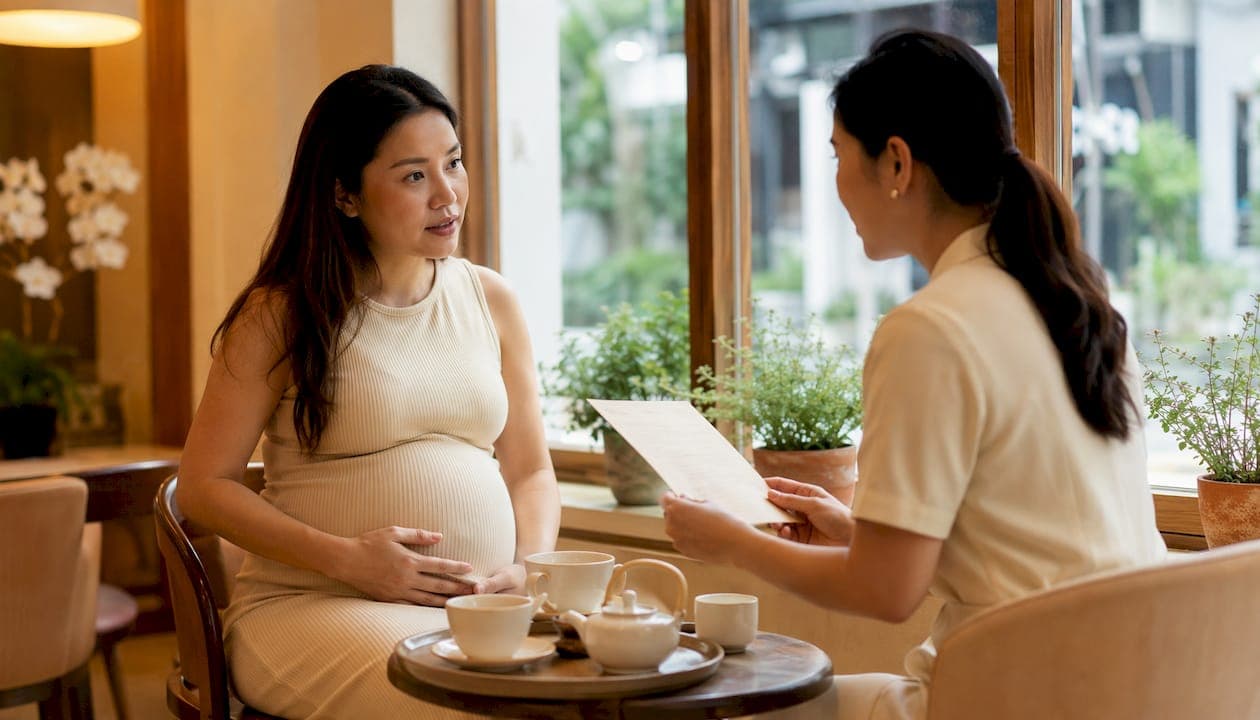
Most noninvasive facials can be safely adapted for pregnancy when a clinic uses pregnancy-appropriate ingredients and adjusted protocols. The key rule: always disclose your pregnancy before your appointment and confirm with your OB/GYN if you have any high-risk factors. As ob-gyn Dr. Sara Twogood notes, spa treatments can genuinely support stress relief during pregnancy — the priority is choosing the right kind. Surface-level, hydrating, and wellness-focused treatments are where to start.
Table of Contents
- What facial treatments are safe during pregnancy?
- Which treatments and ingredients should you avoid while pregnant?
- How does trimester timing affect your facial appointment?
- How do you choose a pregnancy-safe facial provider in Singapore?
- What should you expect at a pregnancy-safe facial appointment?
- Post-treatment care and when to call your doctor
- Pregnancy-adapted facials at Houseofwellnesssg in Singapore
- Key Takeaways
- Why a wellness-first approach matters more than you might think
- Useful sources and further reading
What facial treatments are safe during pregnancy?
Common pregnancy-safe options include hydrating masks, gentle enzymatic exfoliants, low-strength lactic or glycolic acid treatments, manual lymphatic drainage, and selected nonthermal LED therapies. These work because they stay at the skin's surface, avoid deep penetration, and carry minimal systemic absorption risk.
- Hydrating and moisture masks: Deeply nourishing without active ingredients that penetrate the dermis. Look for hyaluronic acid, aloe vera, and ceramide-based formulas.
- Low-strength AHA exfoliants: Lactic acid and glycolic acid at low concentrations are generally considered low-risk. They address pregnancy-related dullness and uneven tone gently.
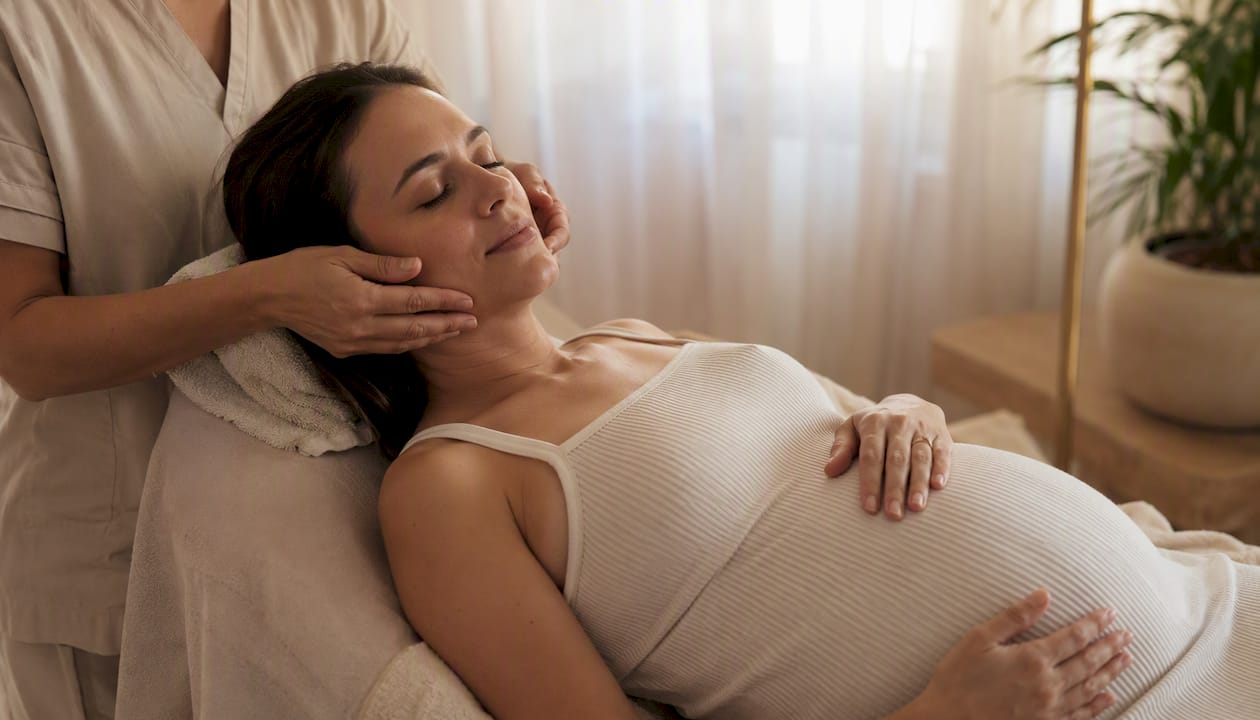
- Manual lymphatic drainage: Gentle, rhythmic massage that supports circulation and reduces the puffiness many people experience during pregnancy. Lymphatic drainage is one of the most genuinely soothing options available.
- Nonthermal LED therapy: Red and near-infrared LED protocols that generate no heat are used by many clinics as a calming, circulation-supporting option. Always confirm the device is nonthermal and that your therapist is trained in pregnancy protocols.
- Gentle hydrodermabrasion: A low-abrasion alternative to traditional microdermabrasion, focused on hydration and mild surface renewal rather than aggressive resurfacing.
The wellness-first goal matters here. Pregnancy is not the time to chase aggressive correction. Stress reduction, improved circulation, and deep hydration are outcomes that genuinely benefit both you and your baby.
Pro Tip: Ask your therapist to show you the ingredient list for every product used in your session before it begins. A reputable clinic will always accommodate this request without hesitation.
Which treatments and ingredients should you avoid while pregnant?
Many cosmetic procedures lack definitive safety data in pregnancy, and the clinical default is to postpone anything discretionary and invasive. Here is what to decline:
- Retinoids (retinol, tretinoin, adapalene): Linked to teratogenic effects at high doses. The AAD advises avoiding retinoids entirely during pregnancy, whether prescription or over-the-counter.
- Hydroquinone: High skin absorption rates make this a firm avoid. Skip any brightening treatment that uses it.
- High-concentration salicylic acid (BHA): Sparingly used low-dose salicylic acid is generally considered acceptable, but high-strength peels and leave-on BHA products should be avoided.
- Deep chemical peels (TCA, phenol): These penetrate beyond the epidermis and carry risks of systemic absorption and post-inflammatory hyperpigmentation, which pregnancy skin is already prone to.
- Injectables and neuromodulators (Botox, fillers): No adequate pregnancy safety data exists. Most clinicians advise postponing these until after delivery and breastfeeding.
- Laser treatments: Particularly for pigmentation, where pregnancy-related melasma can worsen with heat-based energy. Microneedling and procedures that break the skin also carry a small infection risk.
- Topical anesthetics (benzocaine, tetracaine): Absorption levels are uncertain during pregnancy. Lidocaine, where clinically indicated, is generally considered safer, but confirm with your doctor.
Pro Tip: If a clinic cannot tell you exactly which products and devices they plan to use, that is a signal to book elsewhere. Ingredient transparency is non-optional for pregnancy clients.
How does trimester timing affect your facial appointment?
Timing and physical comfort both shift across the three trimesters, and a good clinic will adjust accordingly.
- First trimester: Skin sensitivity often spikes due to hormonal changes. Stick to the gentlest options and avoid anything with strong actives. Nausea can also make lying flat for extended periods uncomfortable.
- Second trimester: Many people feel more settled, but lying flat for long periods can compress the vena cava and reduce circulation. Clinics should offer a propped or semi-reclined position.
- Third trimester: Comfort is the priority. Sessions should be shorter in duration, positioning must be supported with pregnancy pillows, and any device-based treatment should be reviewed carefully.
When to postpone entirely:
- High-risk pregnancy (confirmed by your OB/GYN)
- Recent bleeding or spotting
- Active skin infection or open wounds on the treatment area
- Fever or systemic illness
- Pre-eclampsia or placenta-related complications
- Recent surgical or dermatological procedures
Pro Tip: Always mention your pregnancy status when booking, not just at arrival. This gives the clinic time to review their protocols and substitute products before your appointment.
How do you choose a pregnancy-safe facial provider in Singapore?
Not every clinic that offers facials has adapted their protocols for pregnancy. Here is how to vet one properly.
Questions to ask before booking:
- "Do you have a specific pregnancy-safe protocol, or do you adapt standard treatments?"
- "Which products will you use, and can I review the ingredient list?"
- "Can you perform a patch test before the full treatment?"
- "Is your therapist trained in pregnancy-specific positioning and contraindications?"
- "Do you have adjustable beds or pregnancy pillows available?"
What to look for in a Singapore clinic:
- Therapists with documented training in pregnancy-adapted treatments
- Clear substitution policies (e.g., replacing BHA-based products with enzyme alternatives)
- Willingness to request OB/GYN clearance for high-risk clients
- Transparent product partners with pregnancy-safe formulations (brands like Sothys and Dermalogica offer ranges suited to sensitive and pregnancy-affected skin)
Estimated price range in Singapore: Pregnancy-adapted facials at specialist wellness clinics typically range from SGD 120 to SGD 250 per session, depending on treatment length and modalities used. Expect a slightly longer initial consultation time for first-time pregnancy clients, which may be reflected in the price.
What should you expect at a pregnancy-safe facial appointment?
Before your appointment:
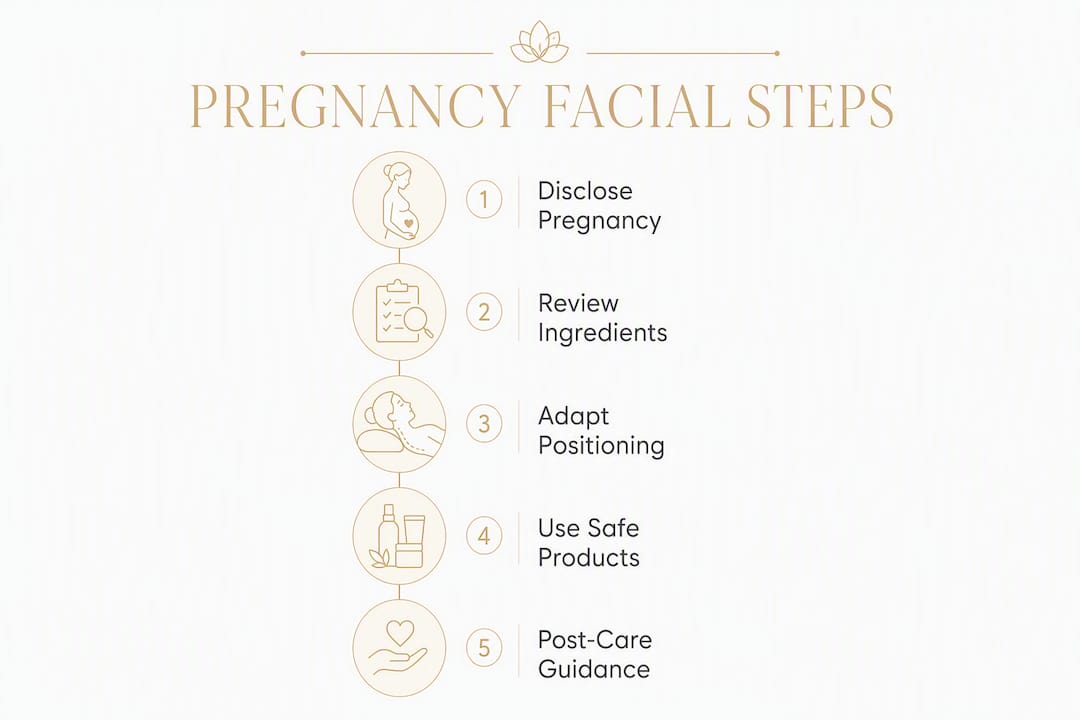
- Disclose your pregnancy, trimester, and any high-risk factors when booking
- Confirm which products will be used and request substitutions if needed
- Get OB/GYN sign-off if you have any complications
During your appointment:
- Your therapist should check your comfort and positioning at the start
- Expect a semi-reclined or propped position, especially from the second trimester onward
- Sessions are typically shorter than standard facials
- No high-heat devices, strong peels, or skin-breaking tools should be used
- The AAD recommends physical sunscreens (zinc oxide or titanium dioxide, SPF 30+) as part of a pregnancy skincare routine, and a good clinic will use these in post-treatment care
After your appointment:
- Mild redness or a dewy flush is normal and typically resolves within a few hours
- Avoid new active topicals for at least 48 hours
- Hydrate well and stay out of direct sun
Pro Tip: Use the restroom before your session and bring a small water bottle. Staying hydrated supports your skin's response to treatment and keeps you comfortable throughout.
Post-treatment care and when to call your doctor
Do:
- Apply a gentle, fragrance-free moisturizer immediately after your session
- Use a physical sunscreen (zinc oxide or titanium dioxide) every morning
- Avoid exfoliation for 48–72 hours if any redness or sensitivity is present
- Keep the treated area clean and avoid touching it unnecessarily
Don't:
- Apply retinoids, high-dose BHA, or new active serums right after a facial without OB/GYN or dermatologist clearance
- Use hot water on the treated area for the first 24 hours
- Book a follow-up treatment within 48 hours if your skin is reacting
Red flags — contact your OB/GYN or return to the clinic if you notice:
- Spreading redness, warmth, or signs of infection at the treatment site
- Severe or worsening swelling beyond mild post-treatment puffiness
- Fever developing within 24–48 hours of treatment
- A persistent or worsening rash that does not resolve within 72 hours
WebMD notes that invasive procedures that break the skin carry a small infection risk — which is why surface-level, noninvasive treatments are the right choice during pregnancy.
Pregnancy-adapted facials at Houseofwellnesssg in Singapore
Houseofwellnesssg at Tanjong Pagar offers a calm, pressure-free environment where your comfort and your baby's safety come first. For expecting clients, the clinic adapts its menu to focus on what genuinely nourishes: gentle hydration, circulation support, and deep relaxation.
Pregnancy-friendly options include the Hydrodiamond hydrodermabrasion facial for gentle surface renewal, lymphatic drainage to ease swelling and support circulation, and selected nonthermal LED therapy protocols. Treatments use Sothys and Dermalogica products, both known for ingredient transparency and formulations suited to sensitive skin. Advanced modalities like radiofrequency and microcurrent are reviewed on a case-by-case basis and deferred when pregnancy protocols require it.
Every session begins with a pregnancy disclosure check, ingredient review, and positioning assessment. Adjustable beds and support cushions are standard. The 90-minute skinwork and relaxation session is a popular choice for clients who want a thorough, unhurried experience. Book your pregnancy-adapted session at houseofwellnesssg.com or visit the clinic at Tanjong Pagar for an in-person consultation.
Key Takeaways
Most noninvasive facials are safe during pregnancy when clinics use pregnancy-appropriate products, adapted positioning, and wellness-focused protocols rather than aggressive correction.
| Point | Details |
|---|---|
| Always disclose your pregnancy | Tell the clinic at booking and again at arrival so products can be reviewed and swapped if needed. |
| Safe treatments to choose | Hydrating masks, low-strength lactic/glycolic AHA, lymphatic drainage, and nonthermal LED therapy are low-risk options. |
| Treatments to avoid | Skip retinoids, hydroquinone, high-dose BHA peels, injectables, lasers, and any skin-breaking procedure. |
| Trimester positioning matters | From the second trimester onward, request a propped or semi-reclined position to avoid compressing circulation. |
| Houseofwellnesssg in Singapore | Offers pregnancy-adapted facials using Sothys and Dermalogica, with mandatory safety checks and adjustable positioning at Tanjong Pagar. |
Why a wellness-first approach matters more than you might think
The conversation around facials during pregnancy tends to focus on what to avoid, and that list is real and worth knowing. But the more useful shift is in how you frame the goal. Pregnancy changes your skin's sensitivity, barrier function, and hormonal balance in ways that make aggressive correction not just risky but counterproductive. A strong peel or a high-heat device on already-reactive skin rarely delivers the result you want, pregnant or not.
What actually works during this period is gentler than most people expect. Lymphatic drainage reduces the puffiness that builds through the second and third trimesters. A well-formulated hydrating facial restores the barrier that hormonal fluctuation disrupts. And the stress-reduction benefit of a calm, unhurried treatment session is not a soft bonus — it has a measurable effect on how your skin recovers and how you feel going into the next week of pregnancy.
The clinics worth trusting are the ones that ask questions before you do. If a therapist does not bring up your pregnancy, does not check ingredients, and does not adjust your positioning, that tells you something about their protocols across the board. Pregnancy just makes the gaps more visible.
Useful sources and further reading
The guidance in this article draws from the following clinical and dermatology resources. For complex cases or high-risk pregnancies, always confirm recommendations with your OB/GYN or a Singapore-registered dermatologist.
| Source | What it covers |
|---|---|
| American Academy of Dermatology (AAD) | Ingredients to avoid, safe skincare routine basics, and physical sunscreen recommendations during pregnancy |
| WebMD — Facial While Pregnant | Safe minor facial options, positioning guidance, and infection risk from invasive procedures |
| The Bump — Spa Safety During Pregnancy | Dr. Sara Twogood's guidance on stress-relief treatments and safety-first adaptations |
| WhatToExpect — Facials During Pregnancy | Safe modalities including lactic/glycolic peels, lymphatic massage, and LED therapy |
| Mothersafe / SES LHD | Clinical caution on limited safety data for elective cosmetic procedures in pregnancy |
| Houseofwellnesssg — Services | Full service menu and booking information for pregnancy-adapted treatments in Singapore |
This article is general information, not medical advice. Confirm current guidance with your OB/GYN or a qualified healthcare provider for your individual situation.