
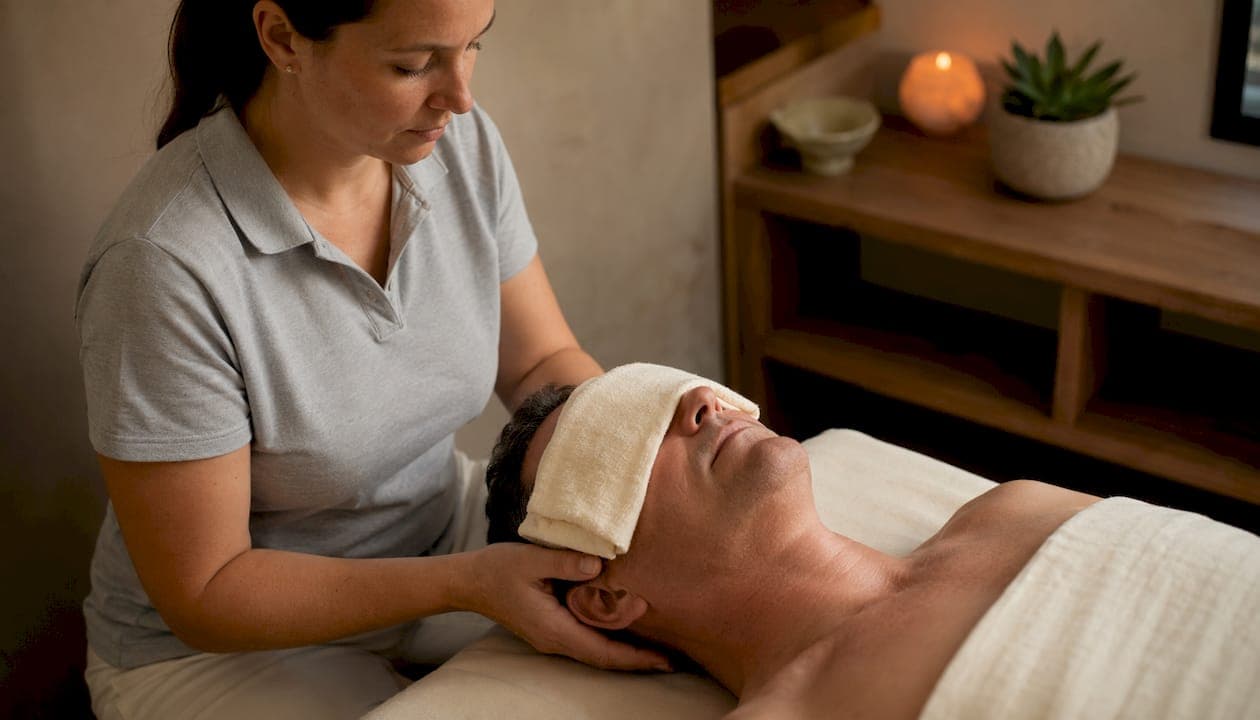
Yes, targeted massage can meaningfully reduce many tension headaches, and the American Massage Therapy Association confirms that massage therapy can reduce headache frequency, duration, and related disability for many sufferers. Two things you can do right now:
- Try a suboccipital self-release: Interlace your fingers behind your skull, let the weight of your head sink into your hands, and breathe slowly. This gently decompresses the muscles at the base of your skull.
- Book a focused session with a therapist trained in neuromuscular or myofascial work if headaches recur weekly or disrupt your day.
The International Classification of Headache Disorders (ICHD-3) defines tension-type headache as a dull, band-like pressure, often bilateral, without the nausea or light sensitivity of migraine. It is the most common headache type, and muscle tension in the neck, jaw, and shoulders is a primary driver. Houseofwellnesssg in Singapore offers customizable sessions that address exactly these patterns within a broader facial and body wellness plan.
Table of Contents
- How massage actually reduces tension headache pain
- The most effective techniques for tension headache relief
- What a therapist will do in your session
- When to skip massage and see a doctor instead
- Self-massage and home habits that reduce recurrence
- What sessions cost in Singapore and how to choose a clinic
- Key Takeaways
- Why integrated wellness changes the headache conversation
- Book a tension-relief session at Houseofwellnesssg
- Useful sources and further reading
How massage actually reduces tension headache pain
Massage works through several overlapping mechanisms. It relaxes overactive muscles, releases myofascial trigger points, improves local circulation, and dials down sympathetic nervous system activity. The result is less referred pain to the head and a calmer overall pain response.

The muscles most involved are the suboccipitals (base of skull), sternocleidomastoid (SCM) along the side of the neck, upper trapezius across the shoulders, levator scapulae, and the jaw muscles temporalis and masseter. Each of these can develop trigger points that refer pain into the scalp, temples, or forehead, which is why a headache that feels "in your head" often originates in your neck or jaw.
A PMC case series found that including the SCM, scalenes, temporalis, and masseter in massage protocols produced greater reductions in headache frequency and disability compared to protocols that excluded those muscles. Even short sessions around 30 minutes can improve headache pain when the right muscles are targeted.
The most effective techniques for tension headache relief
The strongest clinical approaches combine suboccipital release, neuromuscular/trigger-point therapy, myofascial release for the neck and shoulders, scalp work, and jaw treatment. Here is how each technique works in practice:
| Technique | What it targets | What to expect |
|---|---|---|
| Suboccipital release | Base-of-skull muscles; posture-related head pain | Sustained fingertip pressure; slow, deep gliding strokes |
| Neuromuscular/trigger-point therapy | Specific knots in SCM, trapezius, levator scapulae | Focused compression held 8–12 seconds per point |
| Myofascial release (neck/shoulders) | Fascial restrictions limiting movement | Slow, sustained stretching with minimal oil |
| Scalp massage | Temporal and occipitofrontal muscles; circulation | Circular kneading; immediate soothing sensation |
| Jaw work (masseter/temporalis) | Referred pain from clenching or TMJ tension | External compression; light circular strokes |
Practitioners recommend treating one side at a time to systematically address trigger points without missing contributing areas.
Pro Tip: Pressure negotiation matters more than most people realize. Susan Juczak and other clinical practitioners stress that pressure must be "just acceptable" — if it makes you brace or hold your breath, it is too much. Muscle guarding from excessive force can actually worsen headache symptoms rather than relieve them.
For clients seeking both tension relief and skin health, adjunct modalities like lymphatic drainage and microcurrent therapy can complement therapeutic massage by supporting tissue recovery and facial muscle relaxation. Radiofrequency and cryotherapy, both available at Houseofwellnesssg, serve as calming recovery adjuncts rather than primary headache treatments.
What a therapist will do in your session
A skilled therapist starts with assessment, not treatment. They will screen your posture, neck range of motion, jaw alignment, and headache history before touching a single muscle, because head pain often reflects imbalances in the neck, jaw, or shoulders rather than a problem at the pain site itself.
| Session phase | Typical duration | What happens |
|---|---|---|
| Intake and assessment | 5–10 min | Posture screen, movement check, symptom history |
| Warm-up (effleurage, heat) | 5 min | Prepares tissues for deeper work |
| Targeted release (NMT/TPR) | 20–30 min | Trigger-point work on suboccipitals, SCM, trapezius, jaw |
| Calming finish | 5–10 min | Light effleurage, scalp work, recovery instructions |
For episodic tension headaches, one to two sessions per month is a reasonable starting point. Chronic or frequent headaches often respond better to weekly sessions initially, tapering as symptoms improve. Houseofwellnesssg offers 70-minute targeted sessions and 90-minute integrative options that blend therapeutic release with skin-health work.
Tell your therapist:
- Where the pain sits and how it spreads
- Your pain scale at its worst and on a typical day
- Any jaw clicking, vision changes, or neck stiffness
- Current medications, especially blood thinners
- Prior injuries, surgeries, or treatments
When to skip massage and see a doctor instead
Avoid massage and seek medical review immediately if your headache comes with any of these red flags:
- Sudden, severe onset ("thunderclap" or worst headache of your life)
- Focal weakness, numbness, or slurred speech
- Vision changes or double vision
- Fever and neck stiffness together
- Headache following head or neck trauma
- Progressive worsening over days without relief
These signs can indicate serious conditions that massage cannot address and may worsen. For routine tension headaches, massage is safe, but disclose your full health history before every session.
Contraindications to discuss with your therapist: recent surgery near the treatment area, uncontrolled hypertension, anticoagulant medications, active skin infection, or active cancer in the region to be treated.
Pro Tip: "More pressure" is not a shortcut to faster relief. Monitor your own comfort throughout the session and speak up if pressure crosses from therapeutic discomfort into sharp or radiating pain. A good therapist will adjust without hesitation.
Self-massage and home habits that reduce recurrence
Short, repeatable self-care between sessions, including trigger-point compression, neck stretches, posture resets, and good sleep hygiene, reduces how often headaches return. A randomized trial-323.pdf) found that trigger-point self-massage reduced headache intensity, duration, and analgesic use, making it a practical daily tool.
- Suboccipital compression: Lie on your back, place two tennis balls in a sock under the base of your skull, and relax for 2–3 minutes. Breathe slowly.
- SCM gentle compress: Tilt your head slightly to one side, find the rope-like SCM muscle with two fingers, and apply light pinching pressure for 10 seconds. Switch sides.
- Jaw release: Open your mouth slightly, place two fingertips on your masseter (cheekbone to jaw angle), and make small circles for 30 seconds each side.
- Scapular squeezes: Sit tall, draw your shoulder blades together and down, hold 5 seconds, release. Repeat 10 times to counter forward-head posture.
- Neck side stretch: Tilt your right ear toward your right shoulder, hold 20–30 seconds, switch. Keep shoulders relaxed throughout.
Stop any technique immediately if you feel radiating numbness, sharp nerve pain, or dizziness. Discomfort should feel like a "good ache," not a sharp or electric sensation.
Drinking water after deep massage helps clear metabolic byproducts released from muscles and reduces the chance of a post-session headache. Pair hydration with screen ergonomics (monitor at eye level, phone held up rather than neck bent down) and scheduled microbreaks every 45–60 minutes.
Pro Tip: Set a phone reminder every hour during desk work to do a 30-second scapular squeeze and chin tuck. This single habit addresses the forward-head posture that loads the suboccipitals and fuels most desk-related tension headaches.
What sessions cost in Singapore and how to choose a clinic
Session pricing in Singapore varies by clinic type, therapist qualification, and session length. Expect a broad range across the market; always confirm current pricing directly with the clinic before booking.
Checklist for choosing a qualified provider:
- Therapist holds a recognized massage or physiotherapy qualification
- Clinic has experience treating headache clients specifically
- Jaw and anterior neck work is available when clinically indicated
- Clear pre- and post-session instructions are provided
- Products used are reputable (Sothys and Dermalogica are examples of professional-grade lines)
- Hygiene and safety policies are clearly communicated
- Session lengths of at least 45–60 minutes are available for focused therapeutic work
Houseofwellnesssg at Tanjong Pagar offers blended sessions using Sothys and Dermalogica product lines alongside therapeutic bodywork. For readers interested in how low-pain techniques integrate into wellness treatments more broadly, this overview of pain-conscious cosmetic methods offers useful practitioner context.
Key Takeaways
Targeted massage, applied to the right muscles with appropriate pressure, is a clinically supported approach to reducing tension headache frequency and intensity.
| Point | Details |
|---|---|
| Massage reduces headache frequency | AMTA confirms massage can lower frequency, duration, and disability for tension-type headaches. |
| Target the right muscles | Suboccipitals, SCM, trapezius, temporalis, and masseter are the key groups; including jaw muscles improves outcomes. |
| Pressure must be acceptable | "Just acceptable" pressure prevents guarding; more force is not more effective and can worsen symptoms. |
| Self-massage works between sessions | Trigger-point self-massage reduces headache intensity and analgesic use in a randomized trial. |
| Houseofwellnesssg offers tailored sessions | Blended 70–90 minute sessions at Tanjong Pagar combine therapeutic release with skin-health modalities. |
Why integrated wellness changes the headache conversation
The conventional approach to tension headaches treats the head. The more effective approach treats the whole system that feeds the head: the neck, jaw, shoulders, posture, and even the skin and fascia that connect them. At Houseofwellnesssg, the philosophy is that your skin and your body are not separate problems. A session that addresses suboccipital tension while also nourishing the skin with Dermalogica or Sothys formulations is not a compromise. It is a more complete picture of what wellness actually means.
What most people underestimate is how much jaw tension contributes to headaches. Clenching during stress, grinding at night, or even holding a phone between ear and shoulder loads the masseter and temporalis in ways that accumulate quietly over weeks. By the time the headache arrives, the jaw has been a contributing factor for days. A therapist who screens for this and treats it, rather than focusing only on the scalp and temples, is working at a genuinely different level of care.
The other thing worth saying plainly: one session rarely resolves a chronic pattern. Readers who book a single appointment expecting a permanent fix often leave disappointed, not because massage failed, but because the expectation was wrong. A protocol approach, with consistent sessions, home self-care, and posture awareness, is what produces lasting change. That is what a good clinic will tell you from the first assessment.
Book a tension-relief session at Houseofwellnesssg
Persistent tension headaches deserve more than a painkiller and a hope. At Houseofwellnesssg in Tanjong Pagar, Singapore, a headache-focused appointment includes a posture and movement assessment, targeted therapeutic release for the neck, shoulders, and jaw, a calming finish, and optional skin-health adjuncts using Sothys and Dermalogica. Sessions run 70–90 minutes and are fully customizable to your comfort and your results.
Before your session, complete a brief health history form disclosing medications, recent injuries, and any red-flag symptoms. If you are experiencing any neurological warning signs, please seek medical clearance first. Massage is a complement to medical care, not a replacement for it.
Ready to feel the difference? Browse available services or book your 90-minute session directly online. You can also explore the restorative treatment options for a combined therapeutic and skin-health experience.
Useful sources and further reading
- AMTA Position Statement on Tension Headaches — The American Massage Therapy Association's official position on massage for tension-type headaches; supports clinical practice and frequency recommendations.
- AMTA Massage Therapy Journal: Massage and Headache Relief — Covers specific techniques, pressure guidance, and session structure; essential reading for both therapists and clients.
- PMC Case Series: Including Anterior Neck and Jaw Muscles — Small but clinically detailed case series showing improved outcomes when SCM, scalenes, temporalis, and masseter are included in protocols.
- Trigger-Point Self-Massage Randomized Trial-323.pdf) — Supports self-massage as a safe, accessible adjunct that reduces headache intensity and analgesic use between clinic sessions.
- Healthline: Head Massage for Headache Relief — Practical post-session recovery guidance, including hydration advice to reduce post-massage headache risk.