
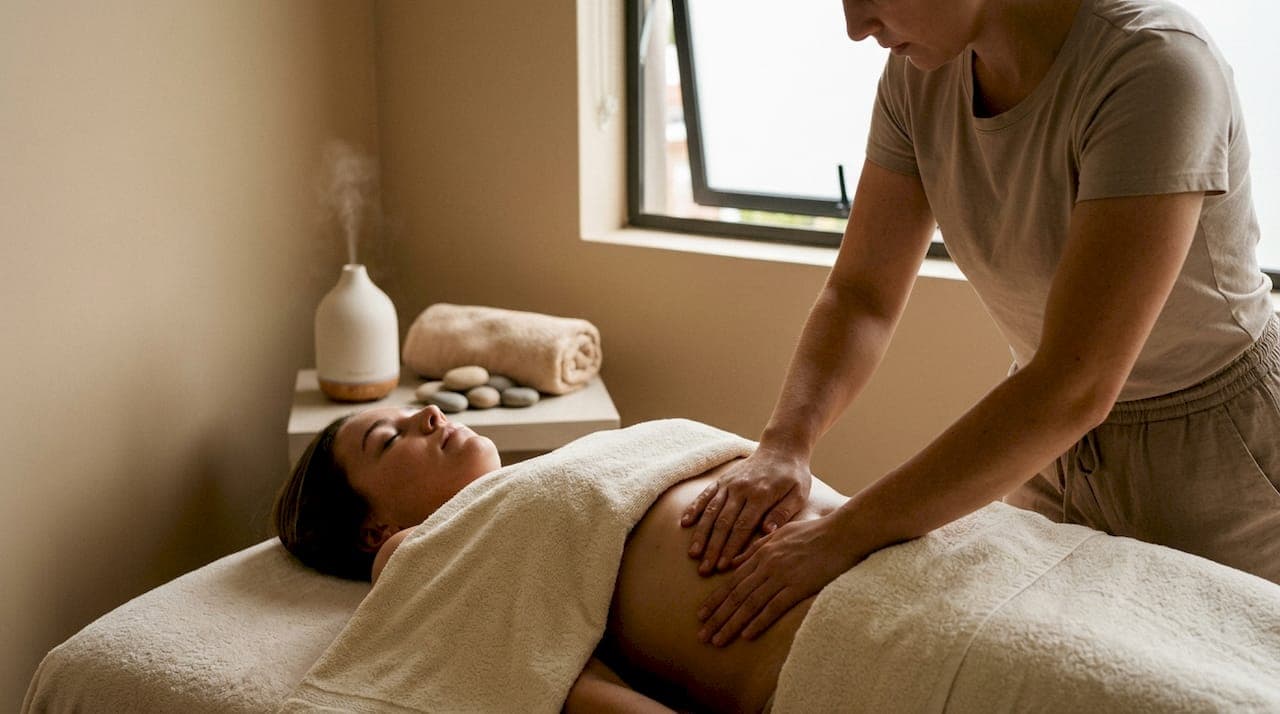
Abdominal lymphatic drainage can ease fluid-related bloating when it's done gently and consistently, but it won't burn fat or fix an underlying digestive disease. The technique responds best to bloating tied to fluid retention, slow lymph flow, or sluggish bowel motility — the tight, puffy feeling many people notice after a salty meal, a long flight, or a stretch of sitting still. It's less likely to help bloating caused by food intolerances, SIBO, or a structural GI issue.
Two things you can try right now, safely:
- Diaphragmatic breathing: five slow belly breaths, inhaling through the nose so your stomach rises, exhaling twice as long as the inhale.
- Light abdominal slides: flat palms, barely any pressure, moving in a slow clockwise circle around the navel for one to two minutes.
If bloating comes with severe pain, fever, or blood in your stool, skip the massage and call a clinician instead.
Key Takeaways
Abdominal lymphatic drainage eases fluid-related and motility-linked bloating through light, directional pressure and breathing, not through fat loss or a cure for underlying GI disease.
| Point | Details |
|---|---|
| Best-fit bloating | Fluid retention and slow-motility bloating respond better than bloating from food intolerance or GI disease. |
| Direction depends on the navel | Strokes go upward toward the armpits above the navel and downward toward the groin below it. |
| Pressure stays light | Effective technique uses skin-level pressure, not deep tissue push, per the constipation trial's methodology. |
| Red flags override self-massage | Fever, severe pain, blood in stool, or rapid worsening mean call a clinician, not continue the routine. |
| Professional sessions add precision | Houseofwellnesssg's lymphatic drainage sessions pair trained technique with intake screening for a calibrated, safe approach. |
Table of Contents
- What Abdominal Lymphatic Drainage Is and Why Anatomy Matters
- Does the Research Actually Support This for Bloating?
- How to Do Abdominal Lymphatic Drainage at Home
- When Should You See a Doctor Instead of Self-Treating?
- What Happens During a Professional Abdominal Lymphatic Session
- How Often Should You Do This for Real Results?
- Where the Advice on This Topic Usually Goes Wrong
- Ready to Add Professional Lymphatic Work to Your Routine?
- Sources
What Abdominal Lymphatic Drainage Is and Why Anatomy Matters
Abdominal lymphatic drainage is a manual technique that uses light, rhythmic strokes to encourage fluid movement through the lymphatic vessels beneath the skin and deeper within the abdomen. It's distinct from a general lymphatic drainage massage on the arms or legs because the abdomen has its own drainage logic, and getting the direction wrong makes the technique far less useful.
The abdomen's lymphatic map splits at the navel. According to StatPearls' anatomical reference, the region above the umbilicus drains upward toward the axillary and pectoral nodes, while the region below drains downward toward the superficial inguinal nodes in the groin. This transumbilical watershed is why a proper routine changes stroke direction depending on where you're working, rather than pushing everything toward one exit point. Deeper abdominal lymph eventually funnels into the cisterna chyli, a collecting sac near the spine that feeds the thoracic duct, the body's largest lymphatic vessel.
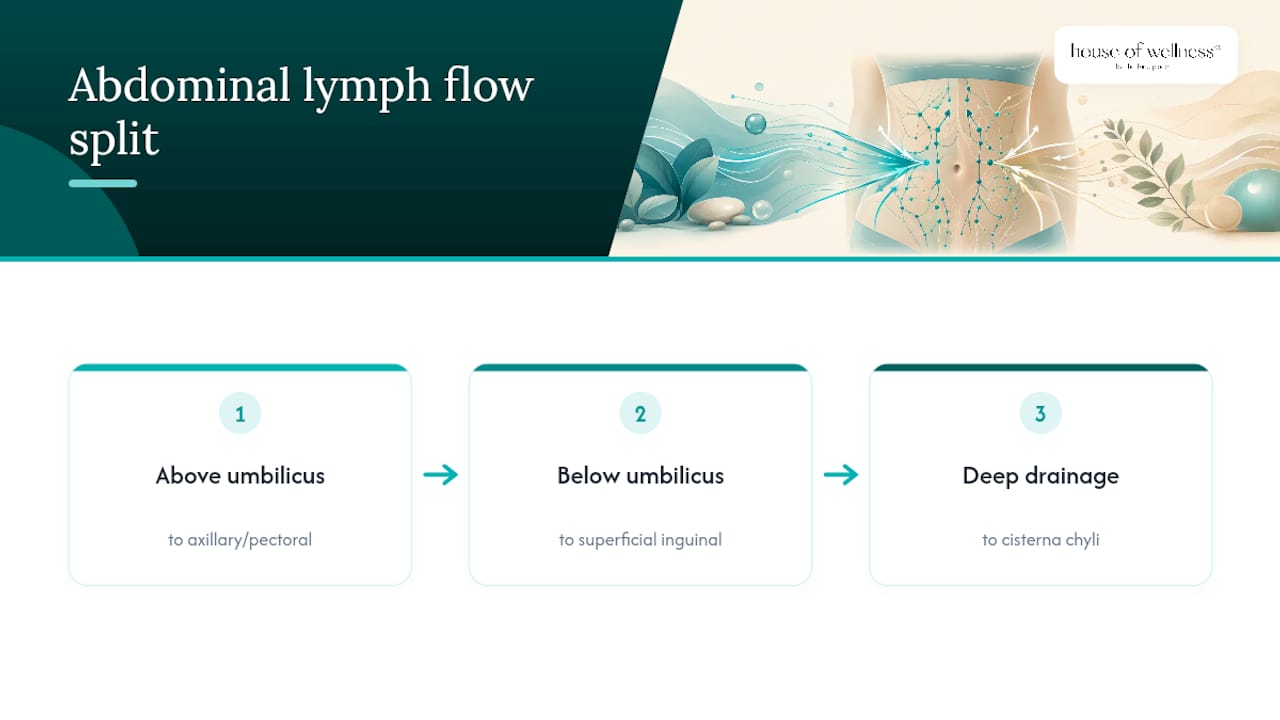
The mechanism is mechanical, not metabolic. Lymph vessels near the skin's surface have almost no muscle of their own to pump fluid forward. They rely on outside pressure changes, like a gentle stroke across the skin or the rise and fall of the diaphragm during a deep breath, to nudge fluid along. That's the entire physiological basis for the technique: light, directional pressure paired with breathing that mimics the abdominal cavity's natural pumping action.
This is also where the biggest misconception needs correcting. Any slimmer feeling right after a session reflects fluid shifting out of the tissue, not fat loss. Cleveland Clinic is explicit that lymphatic drainage massage reduces swelling tied to lymphatic dysfunction. It doesn't dissolve fat cells or reshape your midsection permanently.
Does the Research Actually Support This for Bloating?
The evidence is real but narrower than most wellness content suggests. A randomized controlled trial comparing manual lymph drainage, general abdominal massage, and electrical stimulation in adults with functional constipation found that MLD improved heart-rate-variability measures tied to autonomic nervous system balance, along with bowel movement frequency, according to the PMC-published study. That autonomic shift matters because bloating linked to sluggish digestion often improves when the nervous system moves out of a stressed, sympathetic state and into the calmer, parasympathetic state that governs digestion. A separate nursing study on abdominal massage for malignant ascites symptoms found it eased perceived bloating and discomfort in a clinical population, even though effects on measurable fluid volume varied.
None of this makes abdominal lymphatic drainage a cure. Cleveland Clinic's guidance is direct on this point:
Lymphatic drainage massage can reduce swelling related to lymphatic dysfunction, but it is not a substitute for treating an underlying digestive disorder, and persistent or worsening symptoms warrant medical evaluation.
Massage is unlikely to help, and may even be inappropriate, for:
- Bloating from obstructive GI conditions like a bowel obstruction or severe stricture.
- Bloating tied to untreated inflammatory bowel disease flares.
- Fluid buildup from advanced liver or kidney disease without a doctor's clearance.
- Bloating from bacterial overgrowth conditions that need targeted treatment, not manual therapy.
Manual lymph drainage and general abdominal massage aren't interchangeable, either. MLD uses very light, dermis-level pressure aimed at lymph vessels specifically. Standard abdominal massage often uses moderate pressure to stimulate peristalsis, the wave-like muscle contractions that move stool through the intestines. Both can ease bloating, just through different physiological routes.
How to Do Abdominal Lymphatic Drainage at Home
You don't need special equipment for this. You need clean, warm hands, an empty bladder, and about ten quiet minutes. Lie on your back with your knees slightly bent to relax the abdominal wall, since a tensed stomach blocks the light pressure this technique depends on.
- Clear the proximal nodes first. Before touching your abdomen, spend thirty seconds each gently stroking downward at the sides of your neck, then small circles at your armpits, then light strokes at the crease of your groin on both sides. Clinicians open these hubs first because working the abdomen before clearing them backs fluid up with nowhere to go.
- Start with diaphragmatic breathing. Take three to five slow breaths, letting your belly rise on the inhale and fall fully on the exhale. This alone shifts fluid pressure inside the abdominal cavity.
- Circle clockwise around the navel. Using flat fingers and barely any pressure, trace a slow circle around your belly button in the direction that follows your colon's natural transit, roughly one circuit every four seconds, for about two minutes.
- Slide upward above the navel. For the area between your navel and rib cage, use light upward and outward strokes toward the sides of your chest, mimicking the drainage path toward the axillary nodes.
- Slide downward below the navel. For the area between your navel and pelvis, use light downward and outward strokes toward the groin crease on each side, following the path toward the inguinal nodes.
- Finish with three more diaphragmatic breaths, letting your hands rest still on your abdomen.
The entire sequence should take between eight and fifteen minutes, and the pressure throughout should feel like dragging a fingertip across the surface of water, not a deep-tissue push. If you're using enough pressure to see skin blanch or feel muscle underneath compress, you're pressing too hard.
Pro Tip: Warm your hands under running water or rub your palms together for ten seconds before starting. Cold hands make the abdominal muscles tense automatically, which works against the light-pressure technique you're trying to use.

A few modifications matter. If you're within six weeks of abdominal surgery, get clearance from your surgeon before attempting any self-massage, since incision sites and internal healing tissue need time. If your skin is unusually sensitive or you bruise easily, use even lighter pressure through fabric rather than direct skin contact. Stop immediately if you feel sharp pain, notice new swelling, or feel dizzy or nauseated, and treat any of those as a signal to check in with a clinician rather than push through.
When Should You See a Doctor Instead of Self-Treating?
Certain situations call for medical evaluation before you try any abdominal technique, at home or professionally. Absolute red flags include a recent blood clot or suspected deep vein thrombosis, an untreated or newly diagnosed malignancy in the abdominal region, an active infection with fever, or significant ascites (fluid buildup) that hasn't been evaluated by a physician. Relative contraindications, meaning proceed only with clearance, include recent abdominal surgery, pregnancy past the first trimester without provider approval, and uncontrolled inflammatory bowel disease.
Watch for symptoms that need prompt attention rather than a massage session:
- Severe or worsening abdominal pain, especially if it's localized rather than generalized bloating.
- Fever alongside abdominal symptoms.
- Blood in stool or unusually dark, tarry stools.
- Unexplained weight loss alongside persistent bloating.
- Bloating that rapidly worsens over hours rather than building gradually.
When you call a clinician, describe the timeline (how long, how it started), what makes it better or worse, and any associated symptoms like pain location, bowel changes, or fever. That detail helps a provider decide quickly whether you need imaging, bloodwork, or a straightforward reassurance visit.
What Happens During a Professional Abdominal Lymphatic Session
A trained therapist starts with an intake conversation, not immediate hands-on work. Expect questions about recent surgeries, chronic conditions, medications, and where your bloating tends to concentrate, followed by a quick screening for the contraindications covered above. From there, the session mirrors the at-home sequence but with more precision: clearing the neck, axillary, and inguinal nodes first, then working the abdomen with breathing-synchronized strokes calibrated to your specific anatomy and sensitivity.
Look for practitioners trained in Vodder-method manual lymphatic drainage or working under physical therapist oversight, since that training standardizes stroke pressure and sequencing in a way that's hard to replicate from a how-to guide alone. A full session typically runs 45 to 60 minutes, and House of Wellness's lymphatic drainage service builds in time for both the technique and a proper intake, rather than rushing straight to hands-on work.
Structural knowledge of node locations and the subtle pressure adjustments that come with training are difficult to fully replicate at home, which is part of why professional sessions add value even for people practicing self-massage regularly.
First-time clients at House of Wellness typically start with a standalone lymphatic session to gauge how their body responds before layering in adjunct therapies. When appropriate, radiofrequency heat is sometimes paired with lymphatic work, since the added warmth can support circulation before manual strokes begin. The clinic's own signature detox massage walks through what that combined approach feels like in practice.
How Often Should You Do This for Real Results?
At home, five to fifteen minutes daily is a reasonable target, especially during a stretch when bloating is frequent, like travel, a high-sodium week, or a hormonal cycle phase. Professionally, once weekly to once every two weeks tends to suit people managing ongoing symptoms, tapering to monthly maintenance once things settle.
- Days to notice a difference: many people feel less puffiness within a few hours of a single session, though this reflects short-term fluid shift.
- Weeks to notice a pattern change: consistent daily practice over two to four weeks is where bowel regularity and reduced baseline bloating tend to show up, in line with the improvements the constipation trial recorded.
- Supportive habits that compound the effect: walking for ten minutes after meals, steady water intake through the day, and avoiding long stretches of sitting all support the same lymphatic flow the massage is trying to encourage.
Treat single-session results as temporary and cumulative practice as the real lever. A dedicated look at lymphatic drainage for bloating covers how that pattern typically plays out over a full month of consistent practice.
Where the Advice on This Topic Usually Goes Wrong
Most content on abdominal lymphatic drainage either oversells it as a detox miracle or undersells it as pointless pseudoscience, and neither framing holds up. The honest position sits in the middle: this is a mechanical technique with a modest, real physiological basis, useful for a specific slice of bloating causes and irrelevant to others.
What gets underweighted is how much technique quality matters. Direction of stroke, pressure level, and whether you clear the proximal nodes first aren't minor details, they're the difference between a session that does something and one that's just a stomach rub. Most people who say lymphatic drainage "didn't work for them" were likely pressing too hard or skipping the sequence that makes it effective in the first place.
What deserves more attention is breathing. It's the free, always-available half of this technique, and it's the part most people skip entirely in favor of hand strokes. Prioritize the breathing pattern first, add the strokes second, and treat professional sessions as the place to learn correct pressure rather than the only place it can happen.
— house
Ready to Add Professional Lymphatic Work to Your Routine?
Reading about proper technique is useful, but there's no substitute for a trained hand finding exactly how much pressure your body needs and where your specific bloating pattern originates. Houseofwellnesssg's lymphatic drainage sessions start with the same safety screening covered above, then apply Vodder-informed technique with the precision that's genuinely hard to self-teach, especially around node clearing and the umbilical watershed.

This fits naturally if you've been trying the at-home routine and want a second opinion on your form, or if you're dealing with recurring bloating and want a professional to rule out anything that needs closer attention before you continue self-treating. Sessions run through the full treatment menu, and first-timers can also explore how lymphatic work pairs with radiofrequency for clients looking at both digestive comfort and skin tone in one visit. Book a session to get a proper intake, a technique check, and a plan calibrated to how your body actually responds.
Sources
- Lymphatic Drainage Massage: What It Is & Benefits — Cleveland Clinic
- Comparisons between Manual Lymph Drainage, Abdominal Massage, and Electrical Stimulation on Functional Constipation Outcomes — PMC
- Anatomy, Abdomen and Pelvis: Lymphatic Drainage — StatPearls / NCBI Bookshelf